A Phantasmagoric Detour to the Polychromatic El Mercado
SAN ANTONIO TEXAS
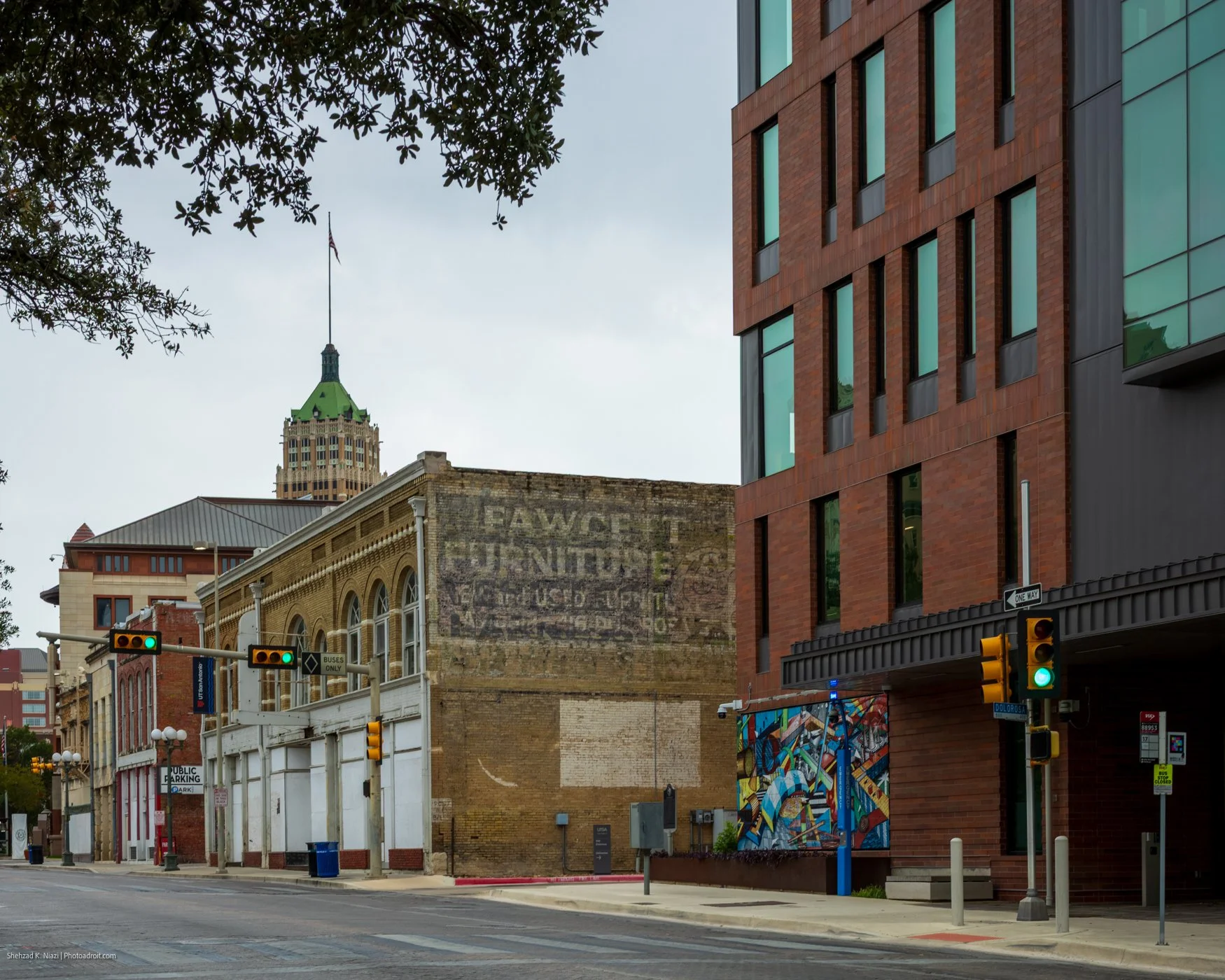
The Alamo City is a thing of layers, a stratification of masonry and memory, where the past is a persistent apparition haunting the perceptions of the present. To walk the perimeter of San Antonio’s Historic Market Square to reach El Mercado is to walk a borderland—a liminal space between the ascending, cold architecture that intermittently dots the modern skyline and the blood-warm brick of Bexar County’s oldest commercial veins. The area now trembles under as gentrification encircles it. Crew with their jackhammers and other construction equipment are busy transforming the area. Older prominently displayed signs—Fawcett Furniture—fades away. Architects are replacing the warmth of heat absorbing brick facade that it releases later, the thermal lag, with reflective glass with metallic coating. Shield for the sponge.
| Feature | Reflective Glass (The Shield) |
Solid Brick (The Sponge) |
|---|---|---|
| Primary Action | Repels Heat. Bounces solar radiation off the surface. | Absorbs Heat. Soaks up energy into dense clay structure. |
| Thermal Mass | Zero. Cools down instantly after sunset. | High. Holds heat for hours (thermal lag). |
| Heat Transfer | Immediate. Heat passing the coating enters instantly. | Delayed. Heat takes hours to travel through the wall. |
| Light | Translucent. Allows light, blocks glare. | Opaque. Blocks all light/view. |
| Best Climate | Constant Heat. (e.g., Tropics, Office Towers) | Diurnal Swings. (e.g., Hot days / Cool nights) |
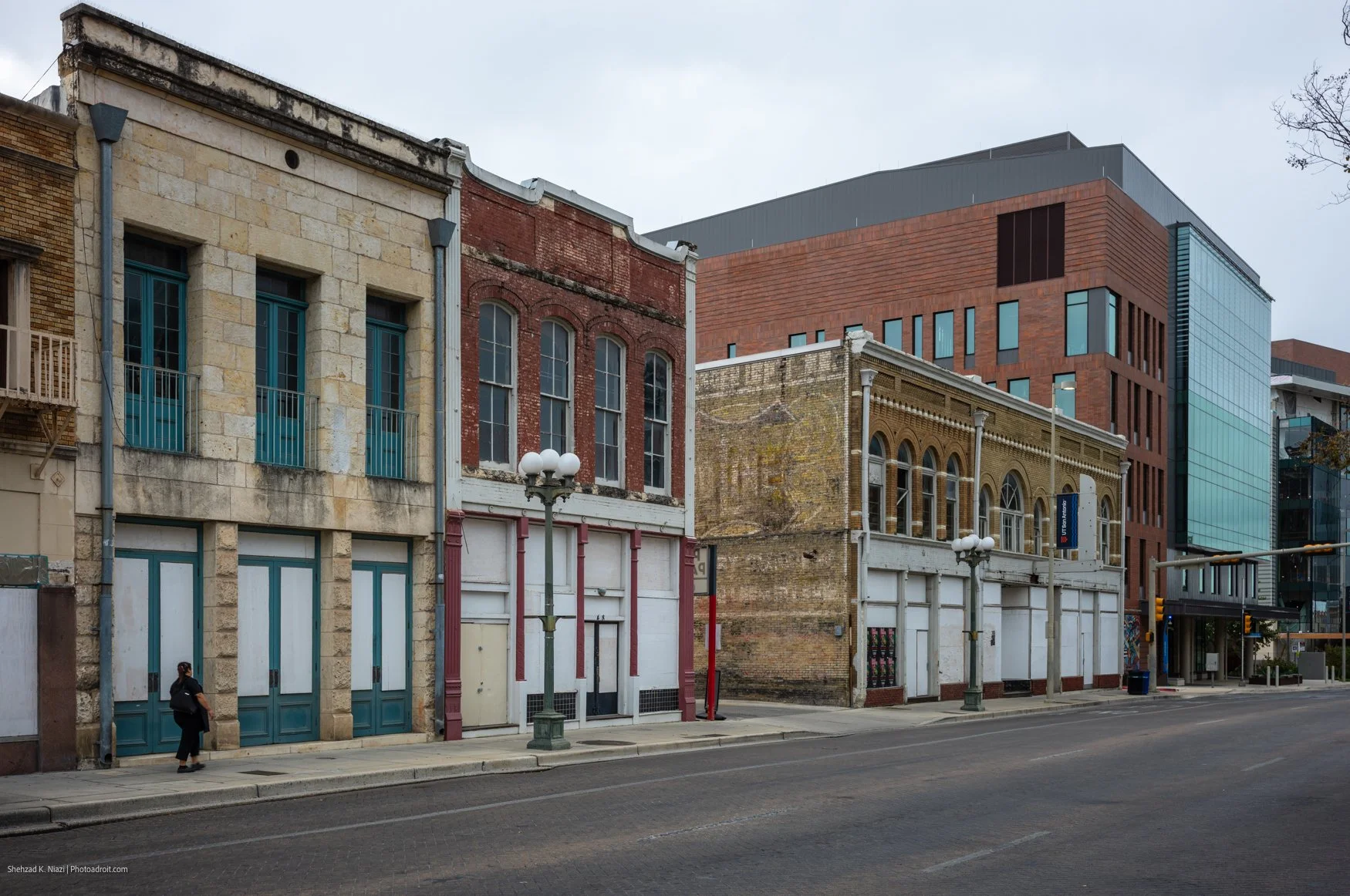
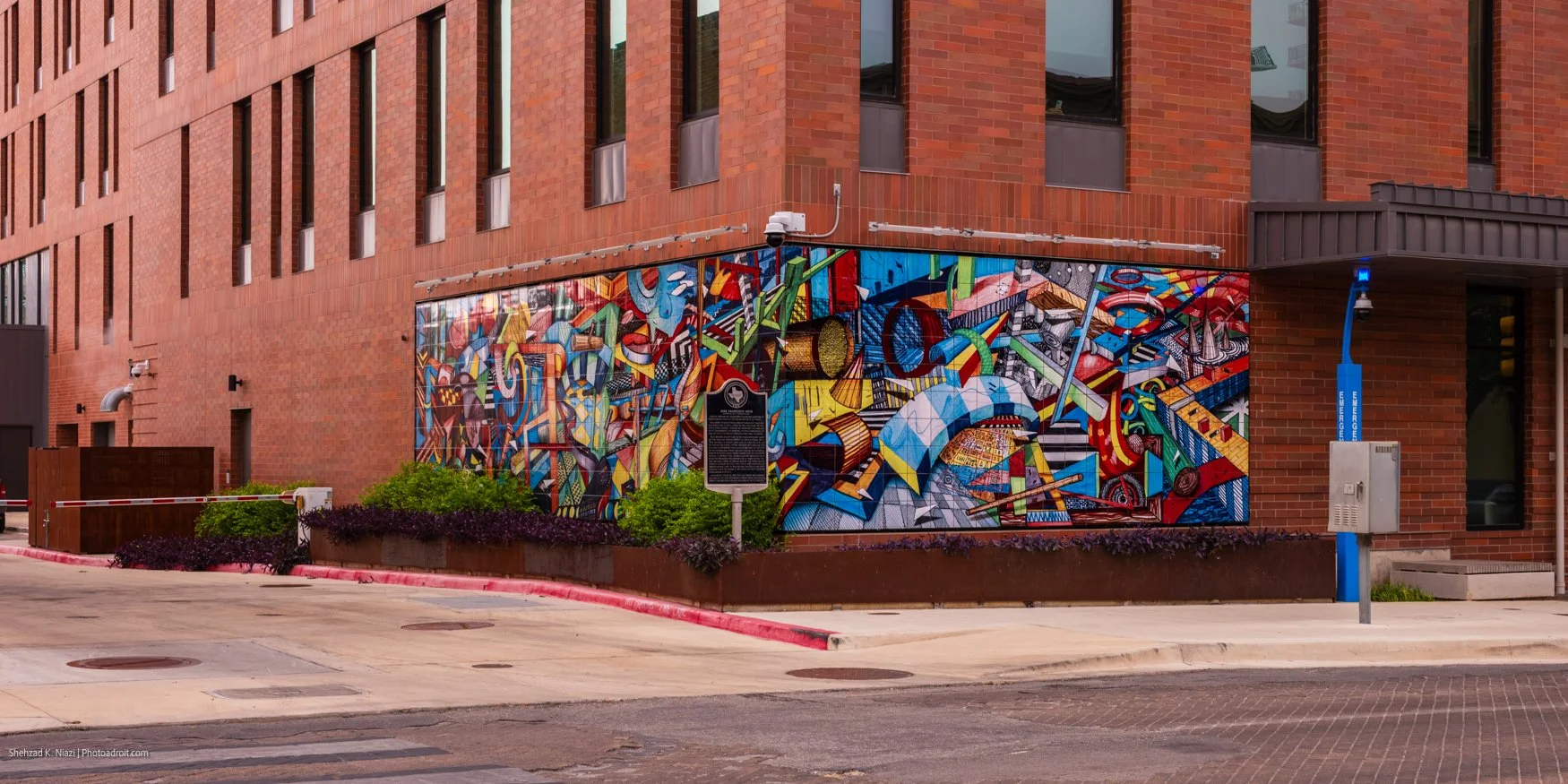
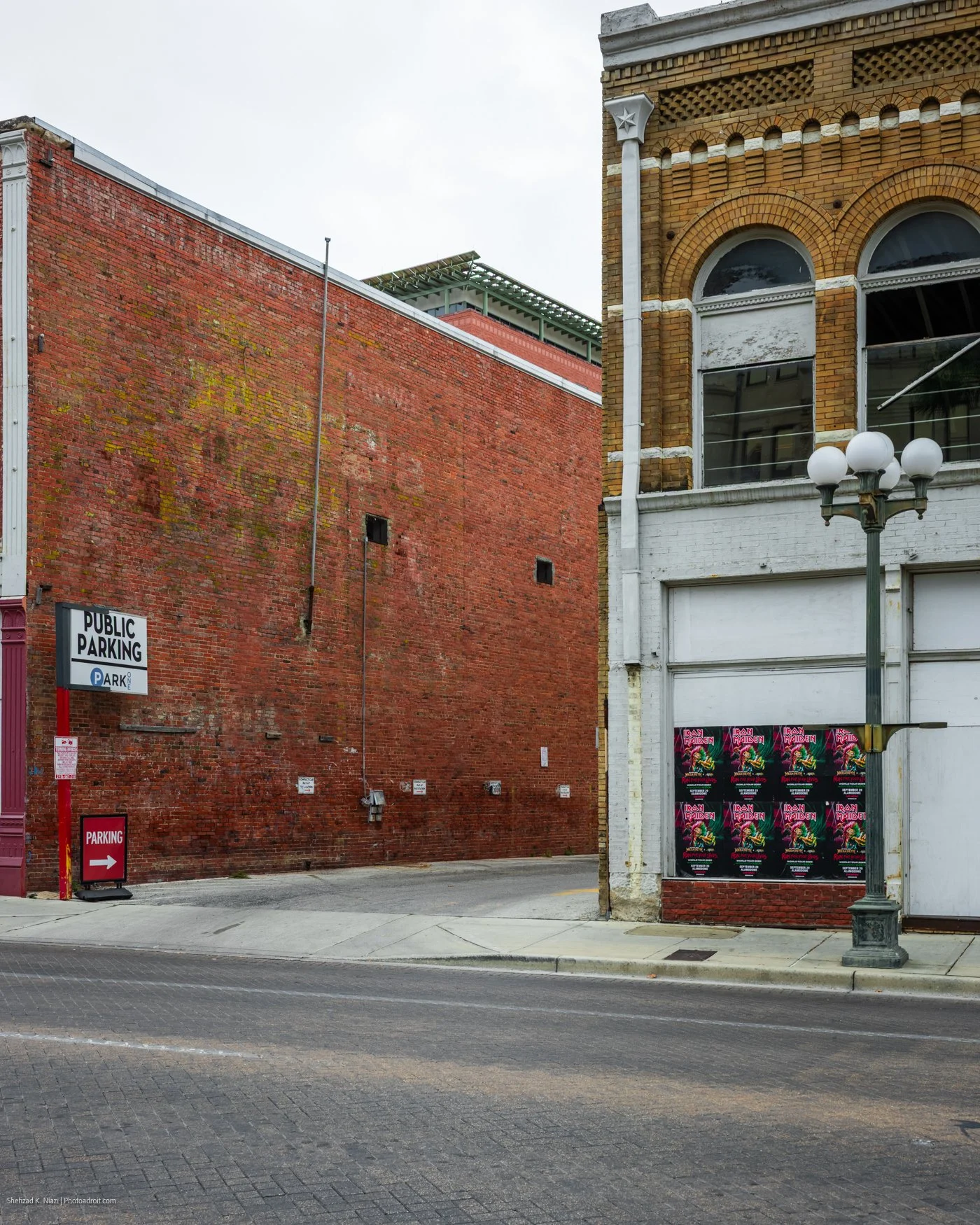
Here, the architectural argument is dialectic; old and new locked in an ongoing conversation. The weathered red bricks of the street-level shops, scarred by a century of commerce, starkly contrast with the terra-cotta cladding and cool, indifferent glass of the building looming behind it. One is tactile, born of the earth and the kiln; the other is cerebral and aloof. The tower reflects the grey sky but holds no memory of it, shedding all that touches its slick exterior. The streets leading away feel suspended, lined by shops with deep recesses acting as waystations between what was and what is coming.
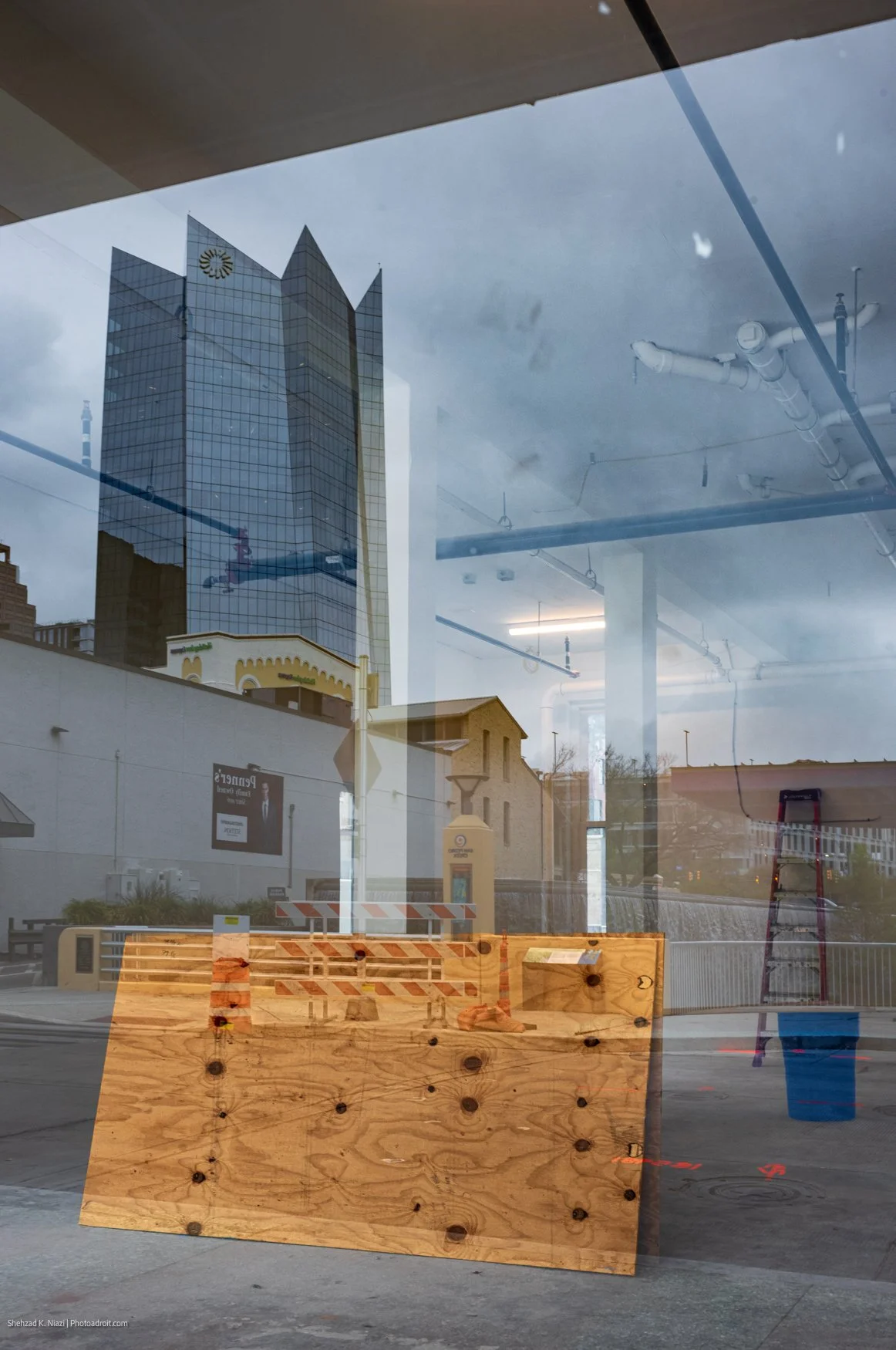
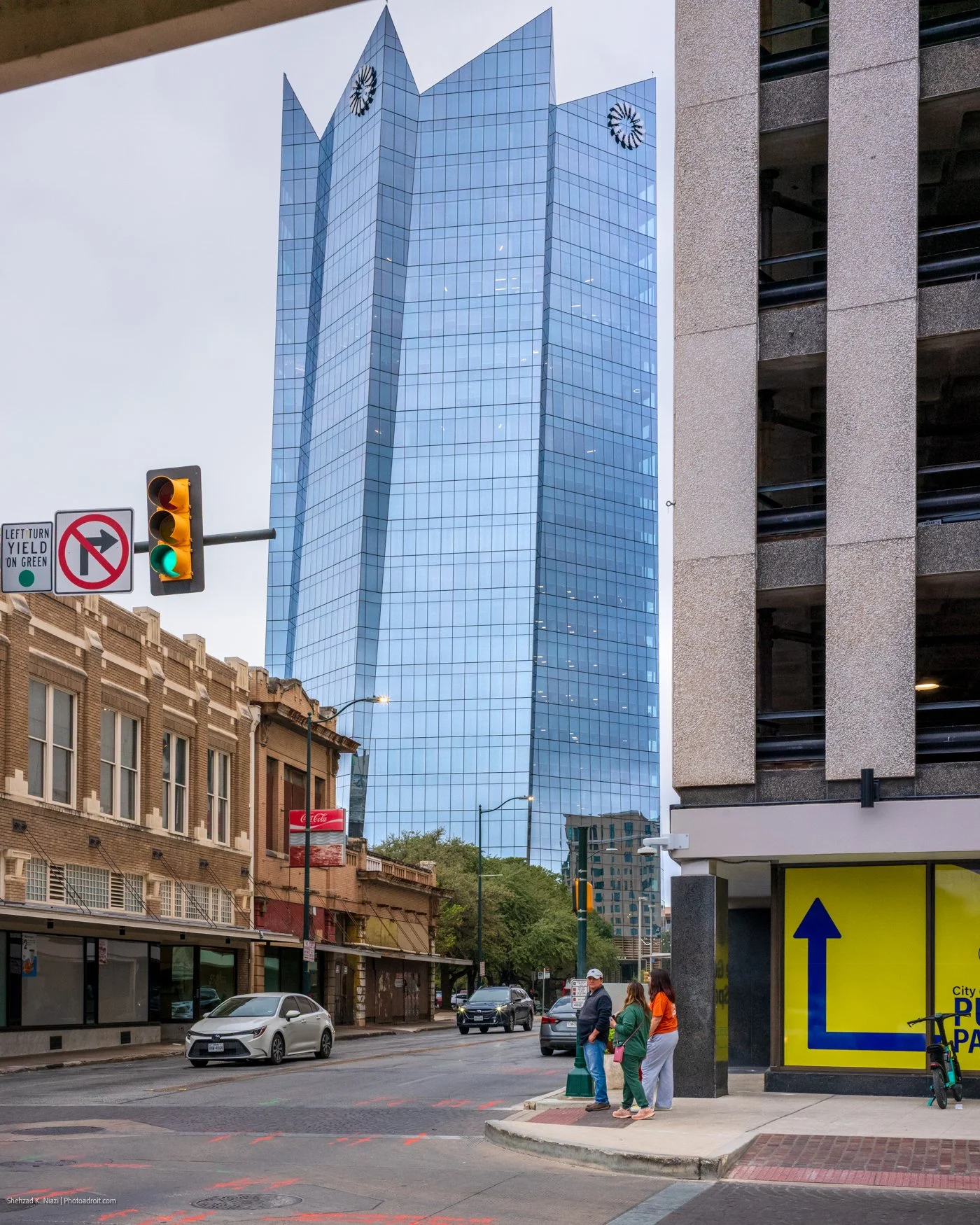
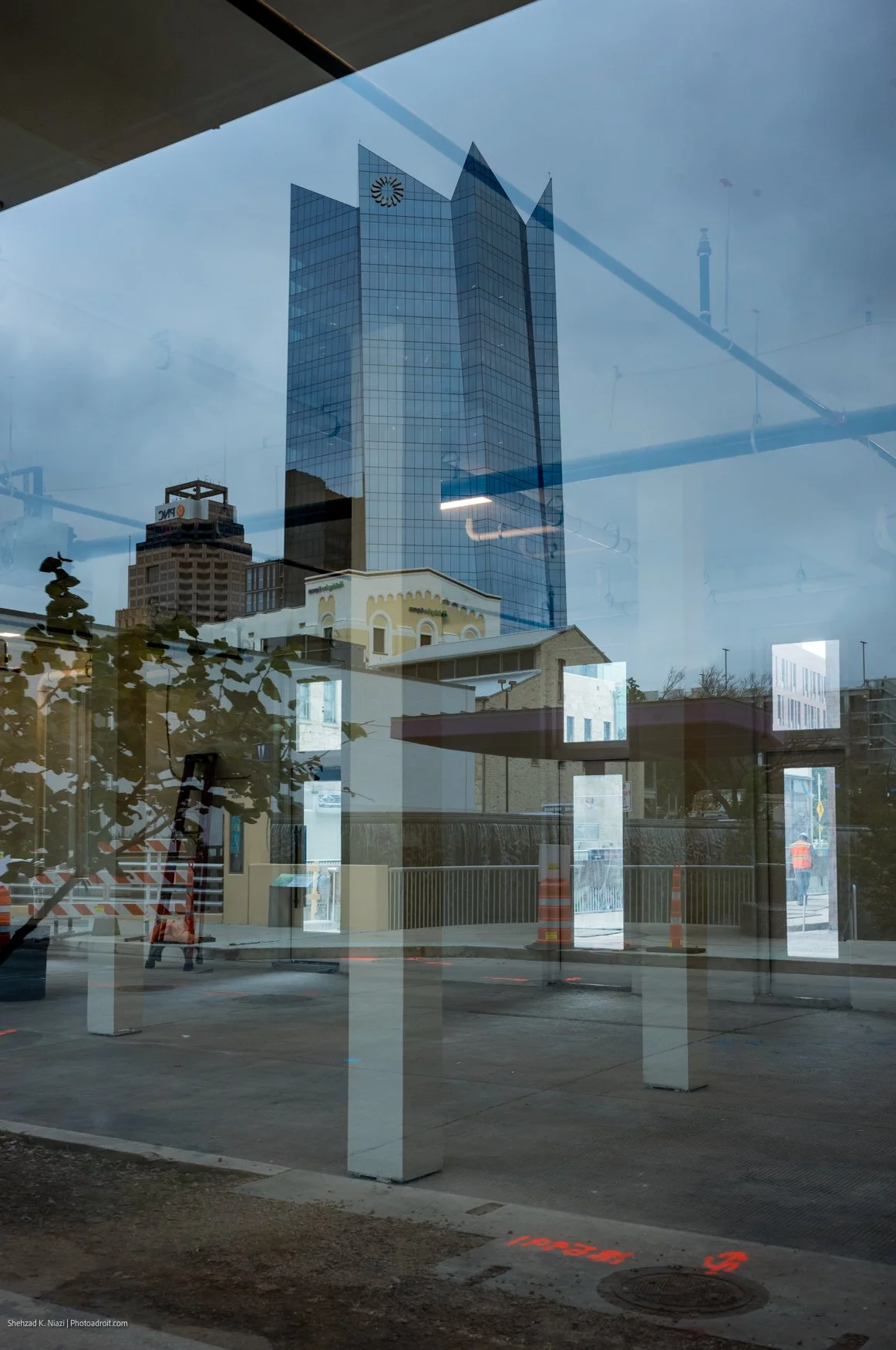
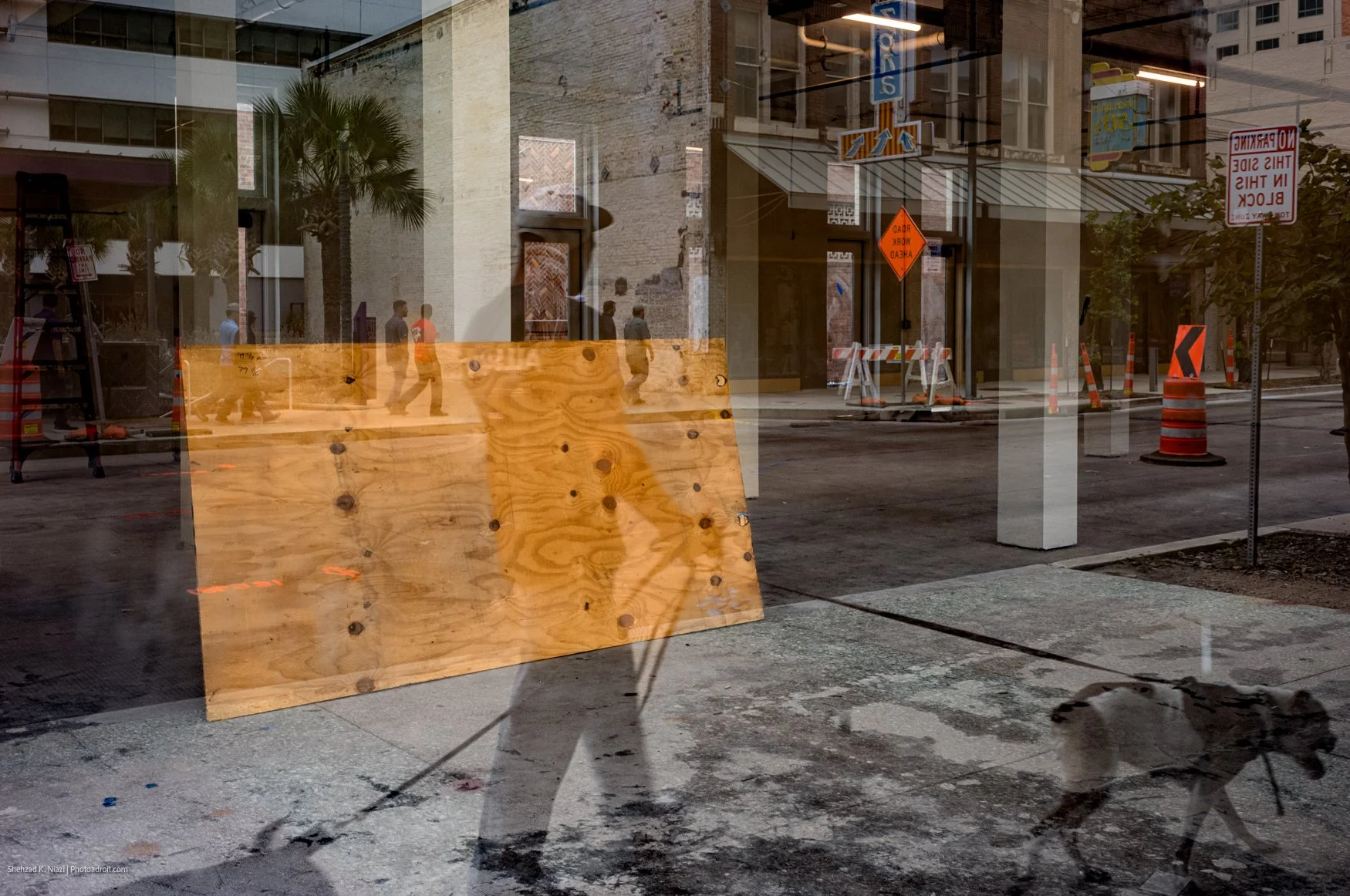
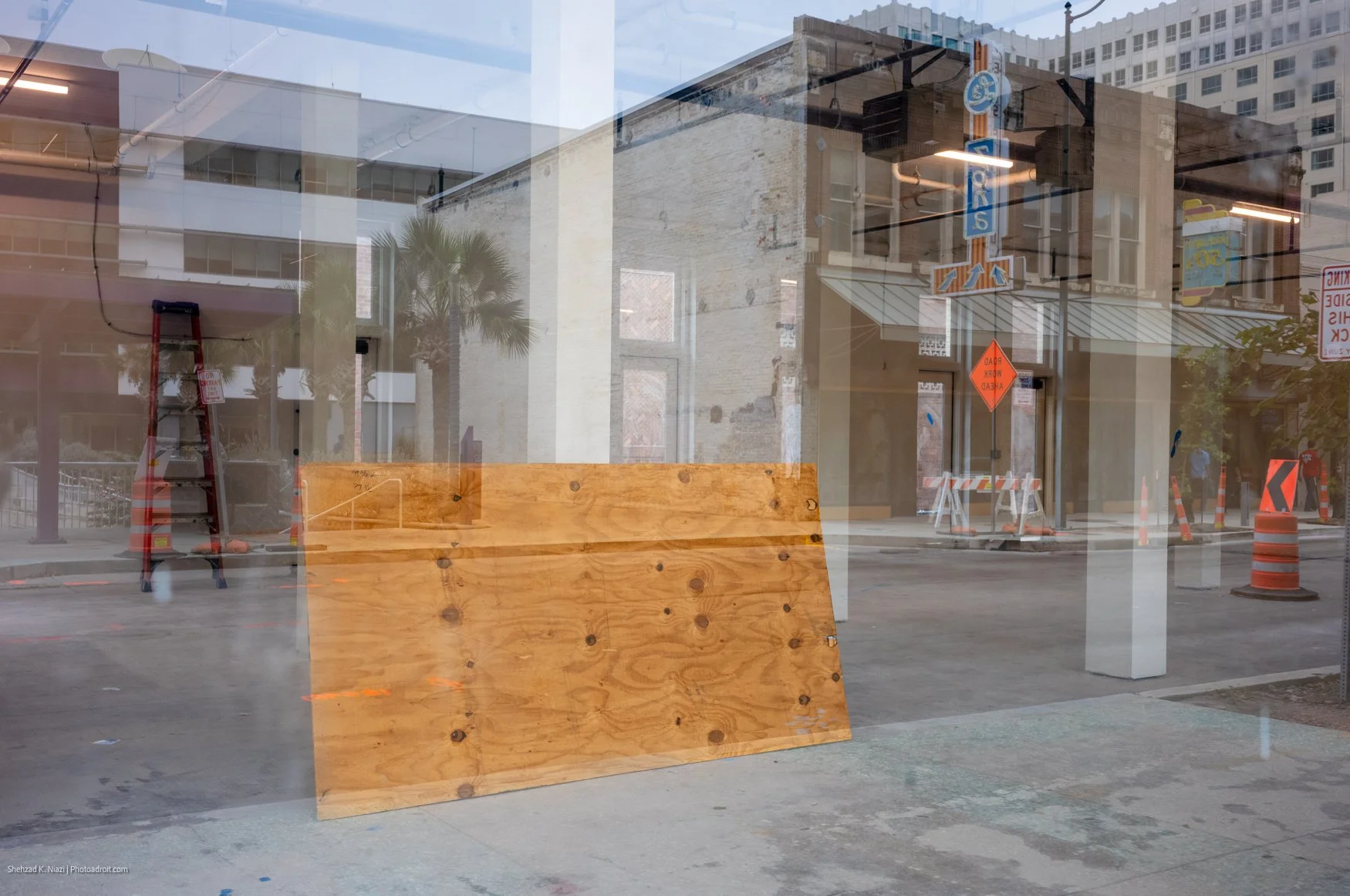
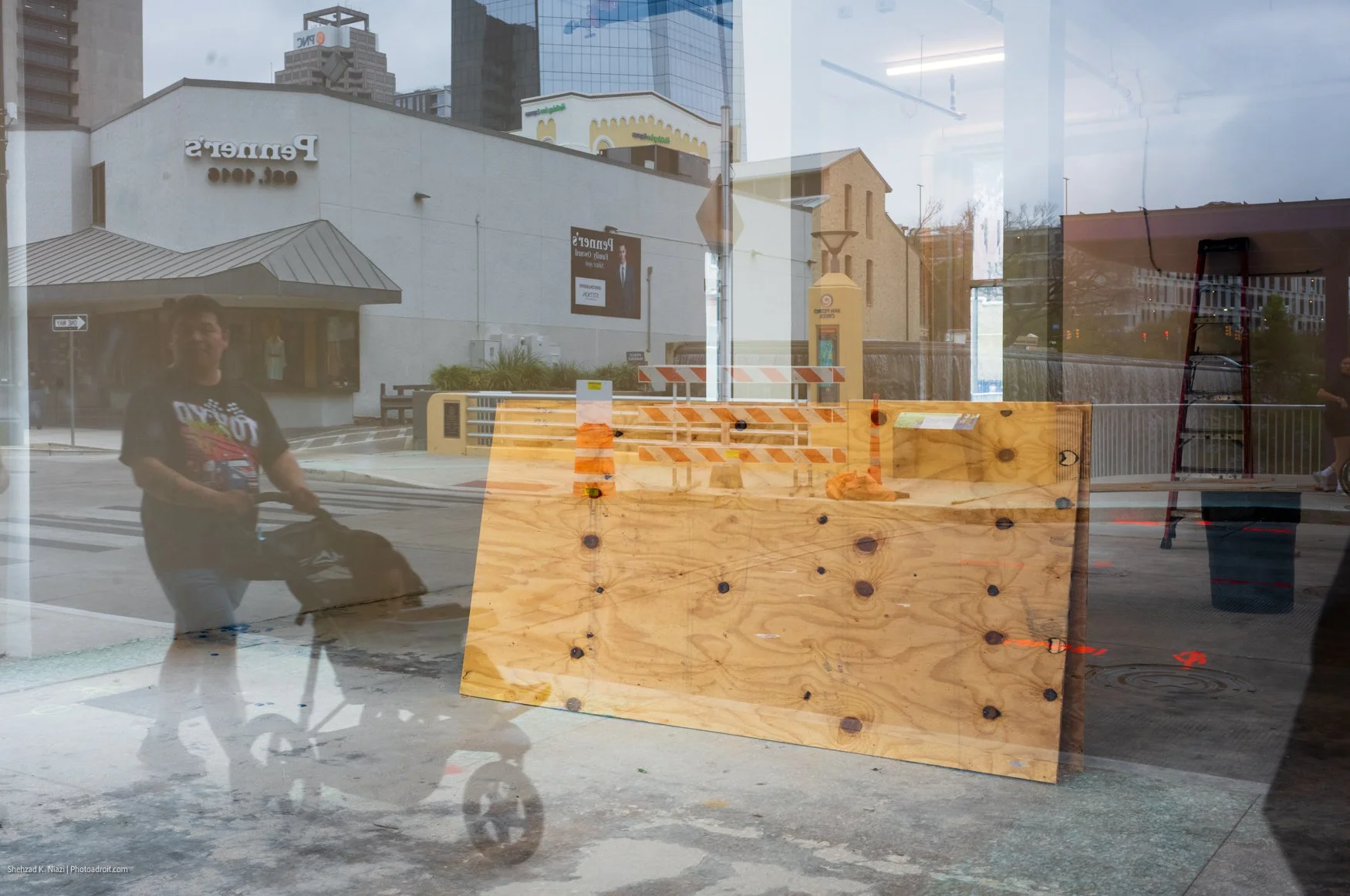
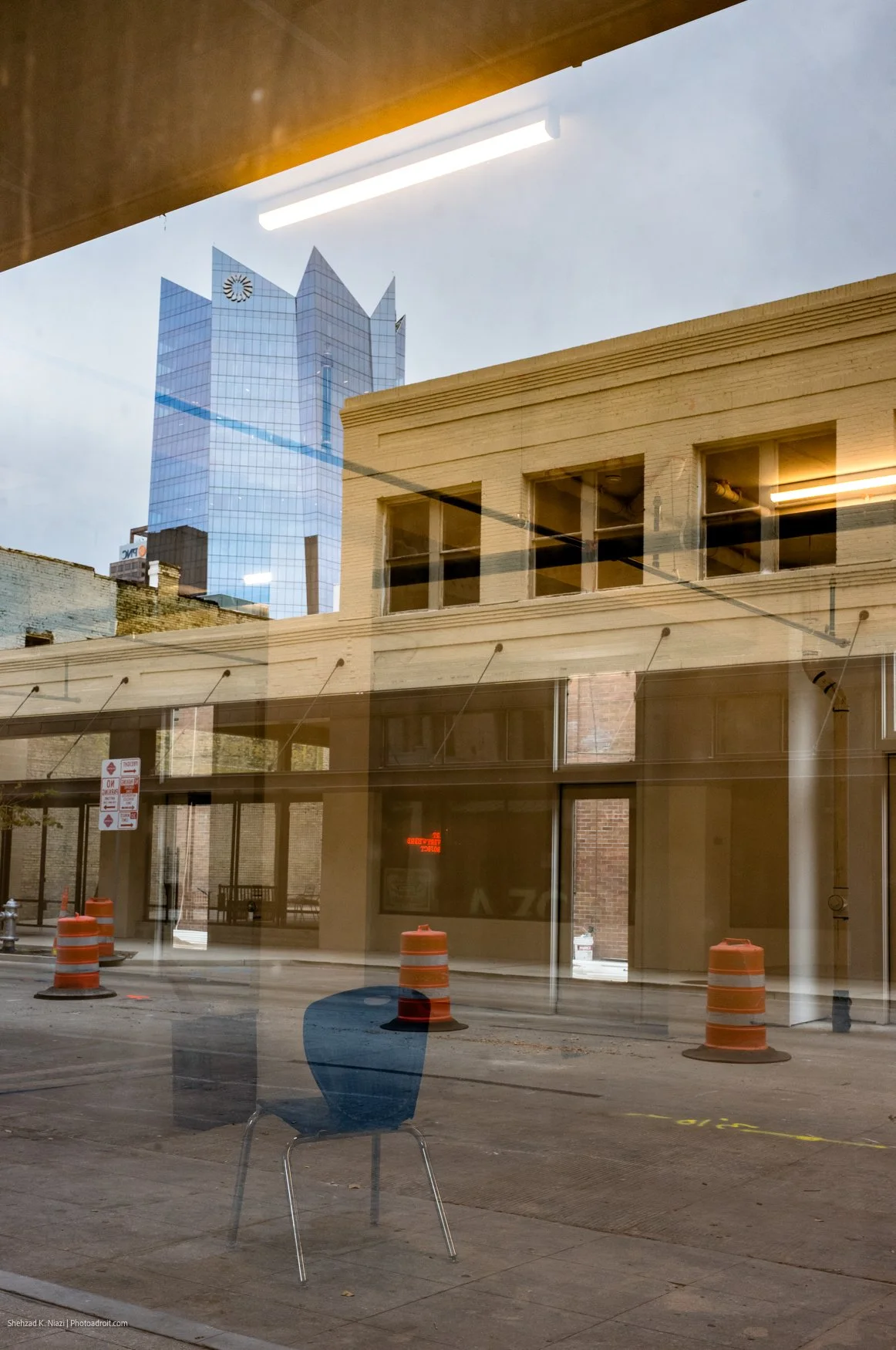
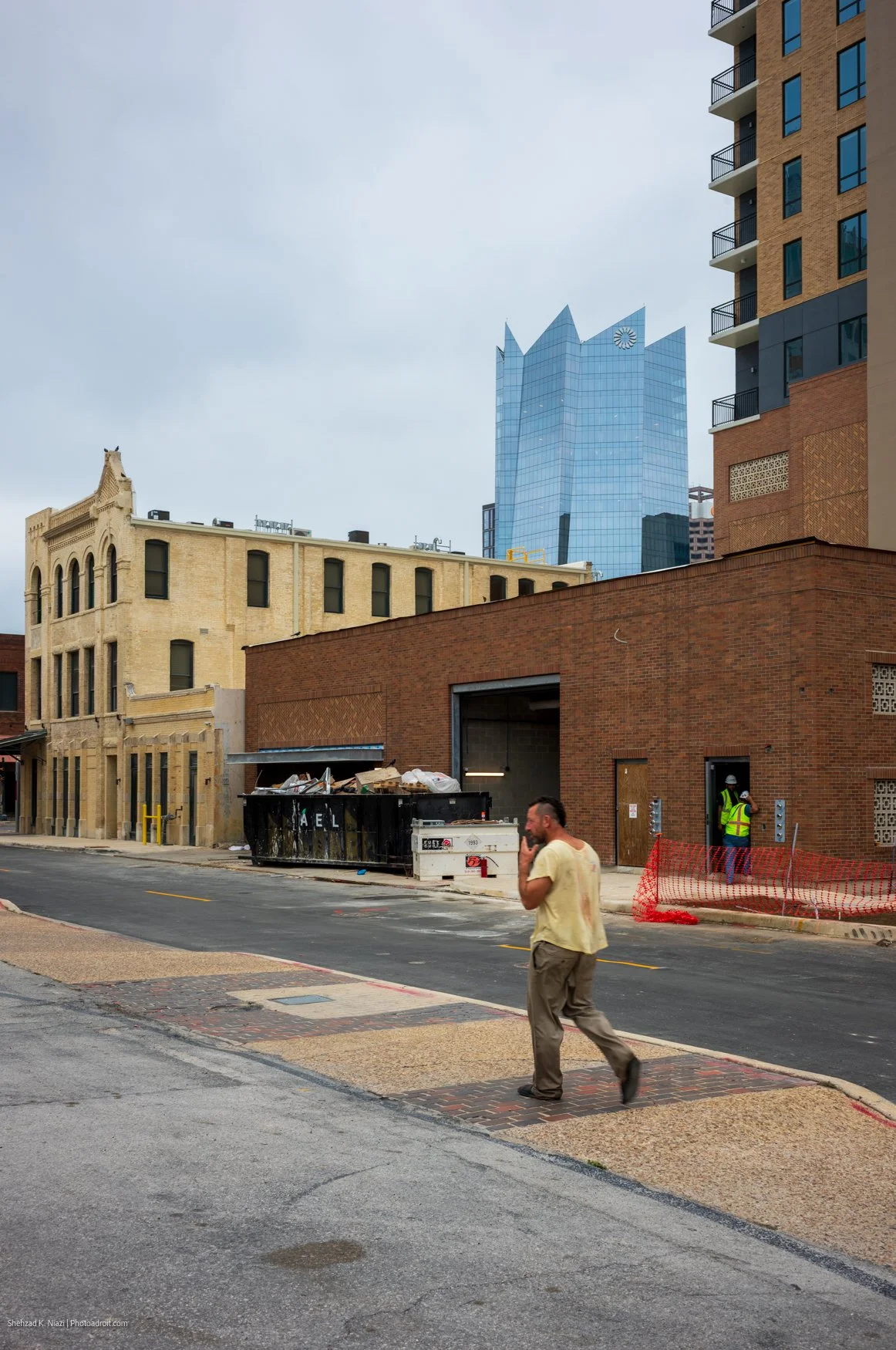
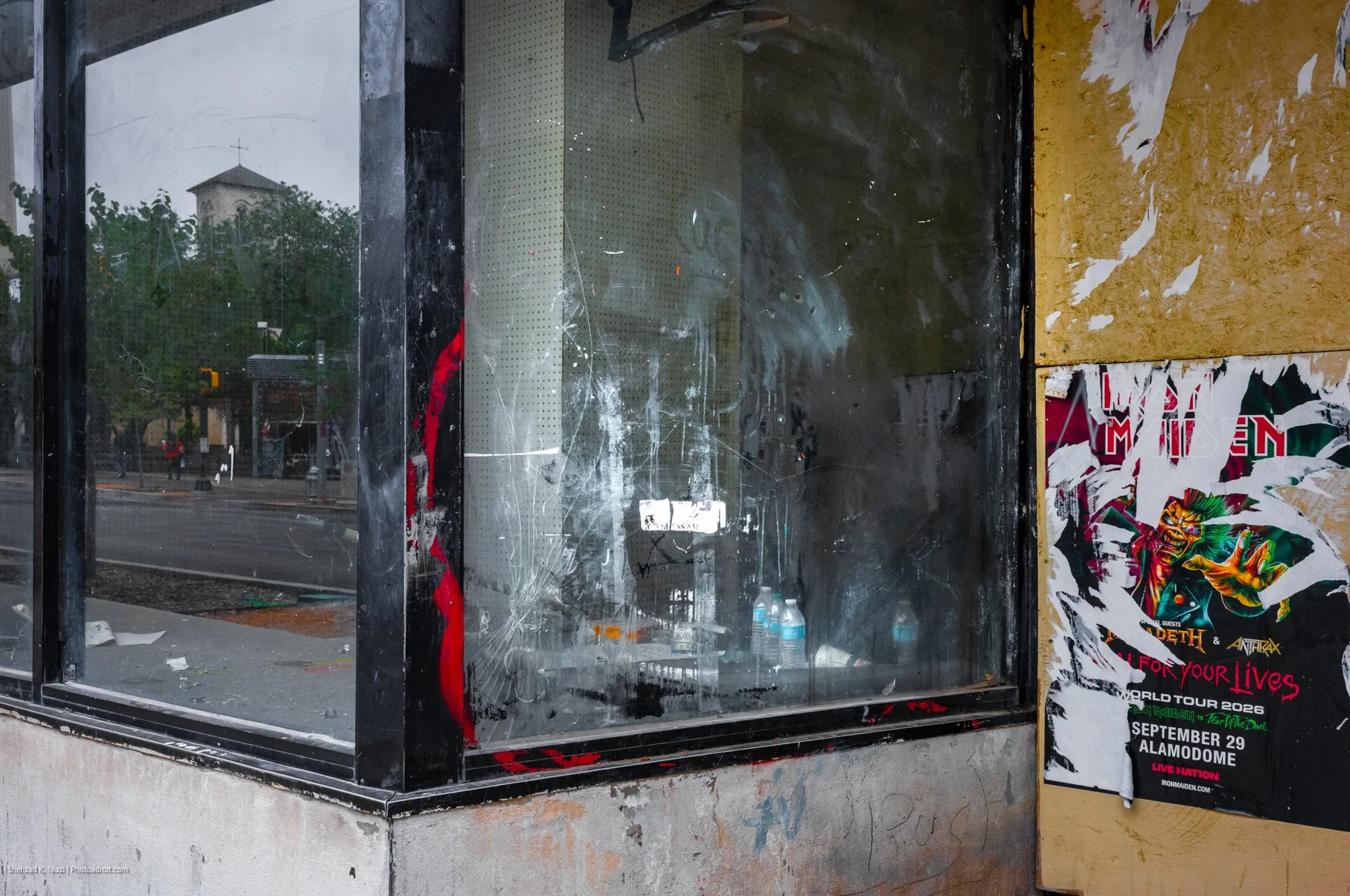
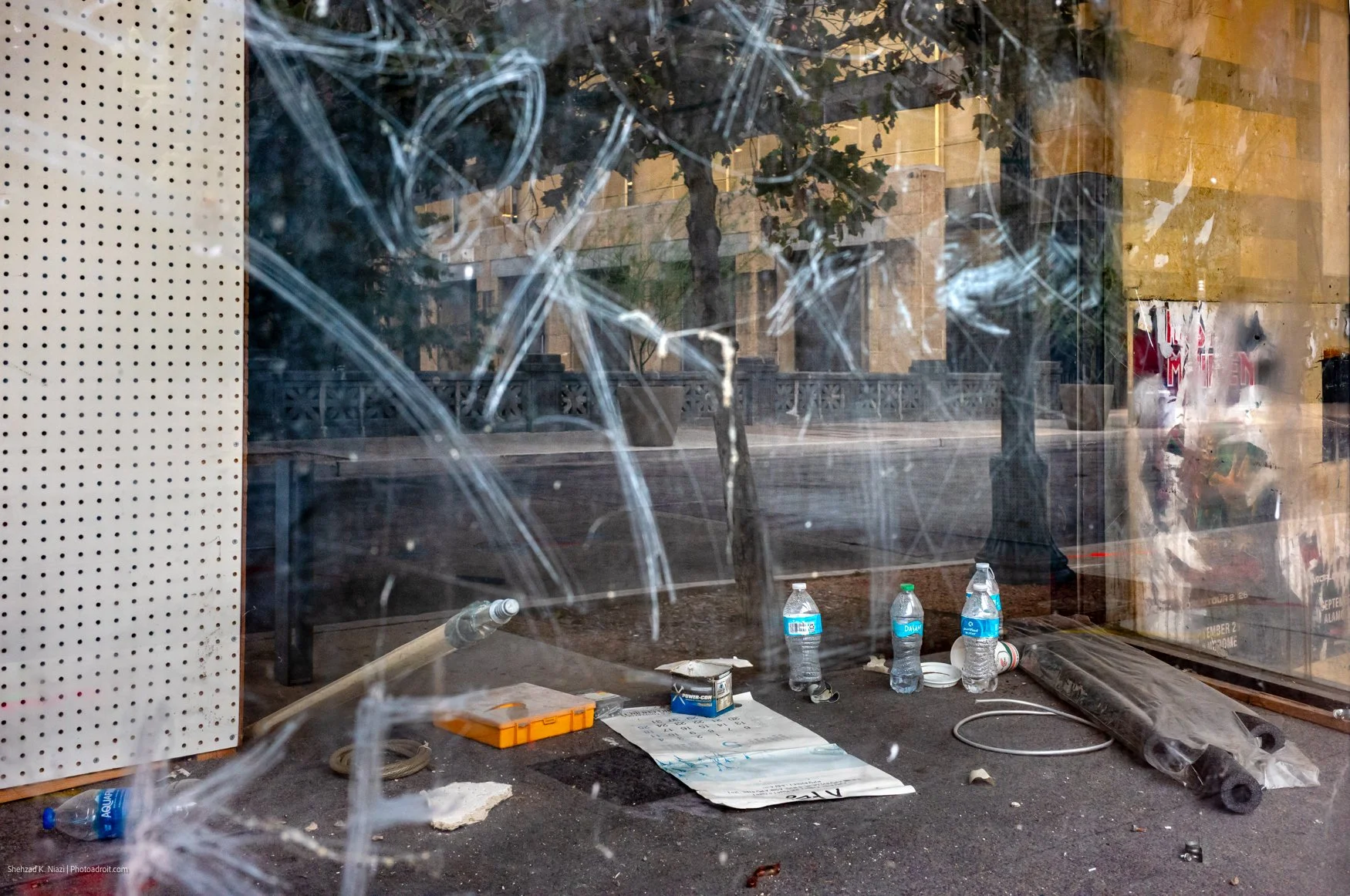
Look into the windows and behold the spectral montage. Here the Frost Bank Tower, that crystalline crown of the new downtown, is not standing tall against the clouds but is trapped within the dusty pane of a vacant shop. It is a layering of imagery—passersby and debris scattered inside a room where the sequential arrangement of objects has collapsed. The pillars stand white and silent while the ghost of the skyscraper passes through them, a double exposure of a city struggling to decide which version of itself is real. It is a phantasmagoria in the glass.
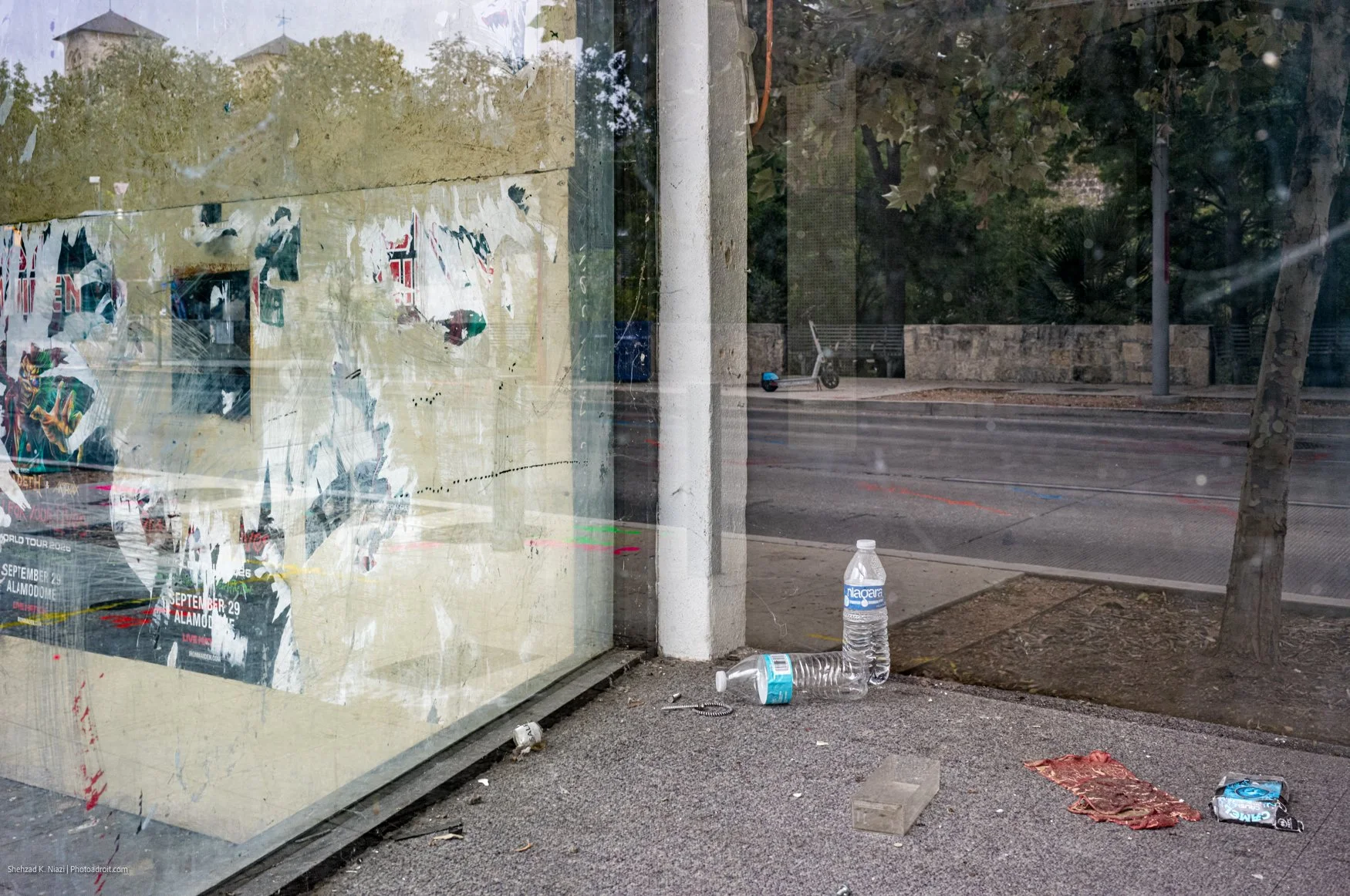
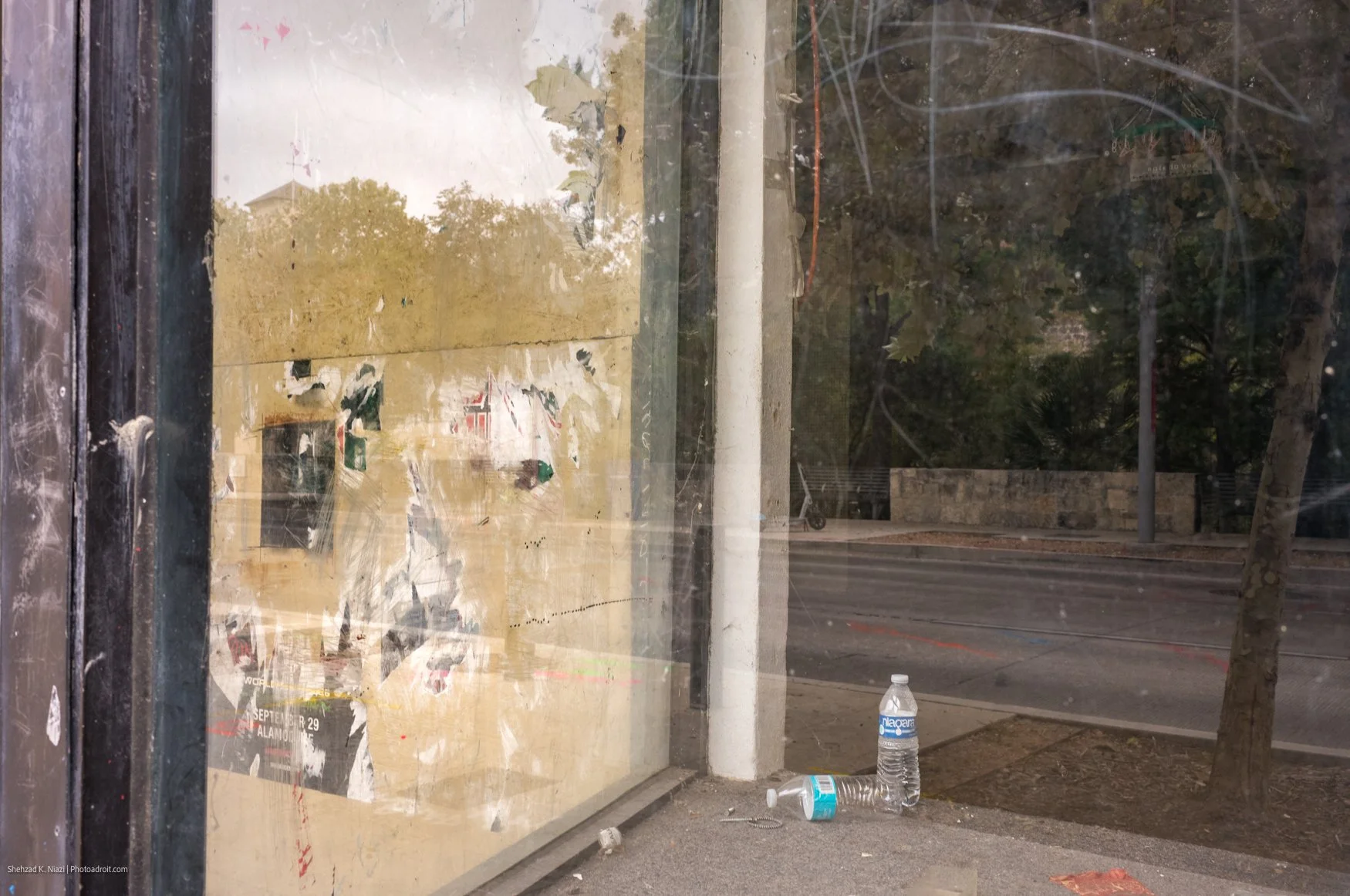
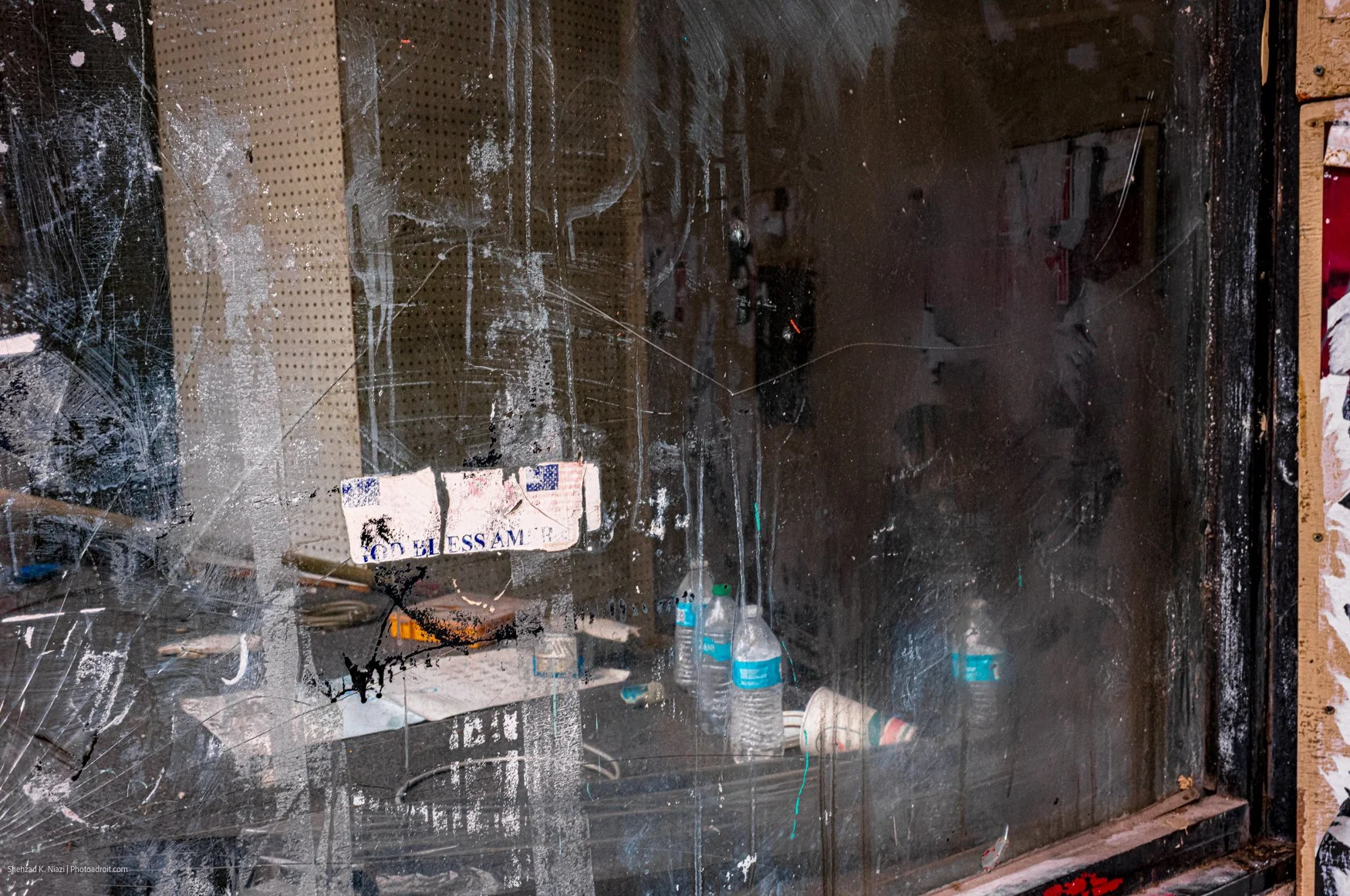
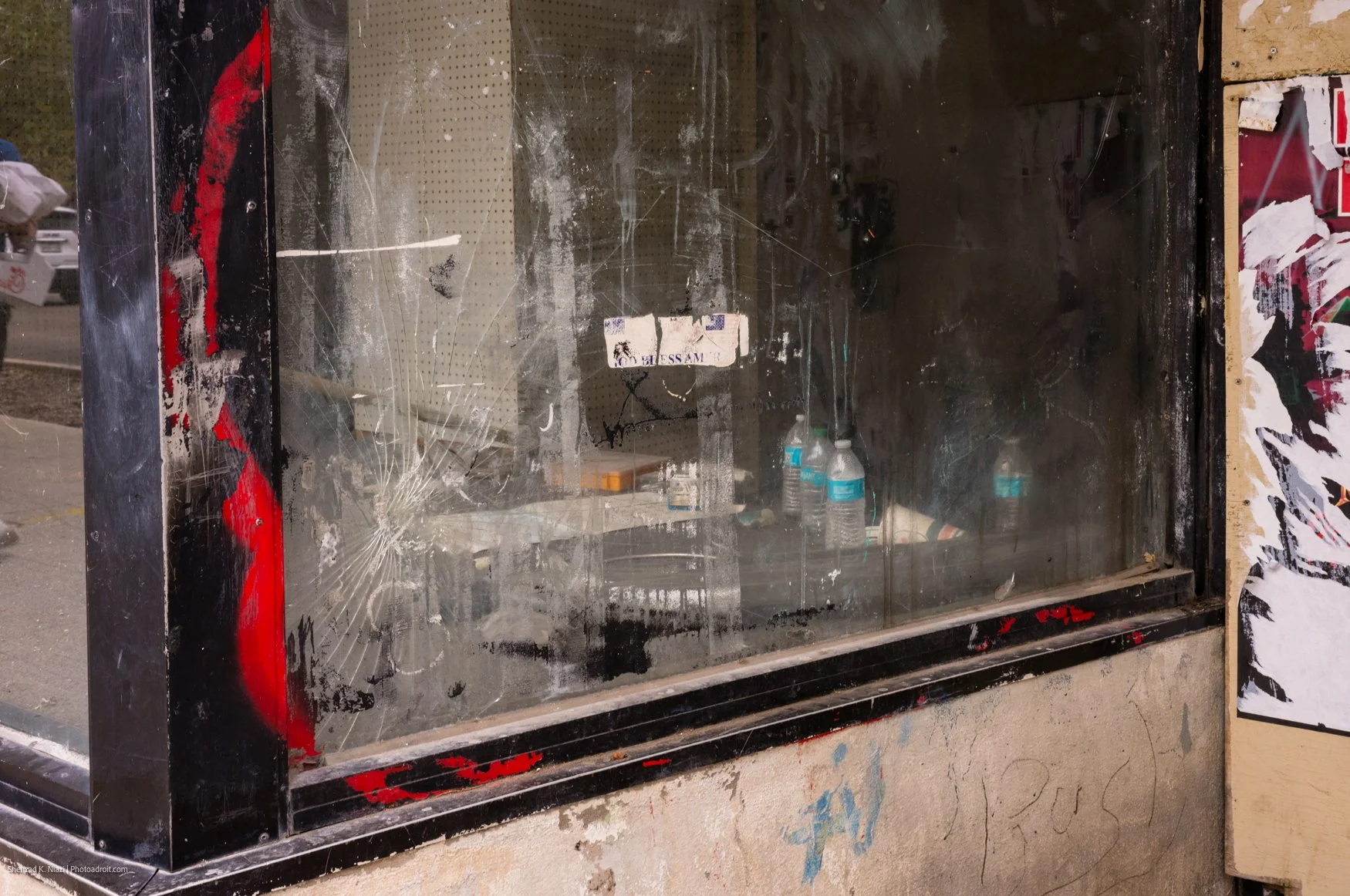
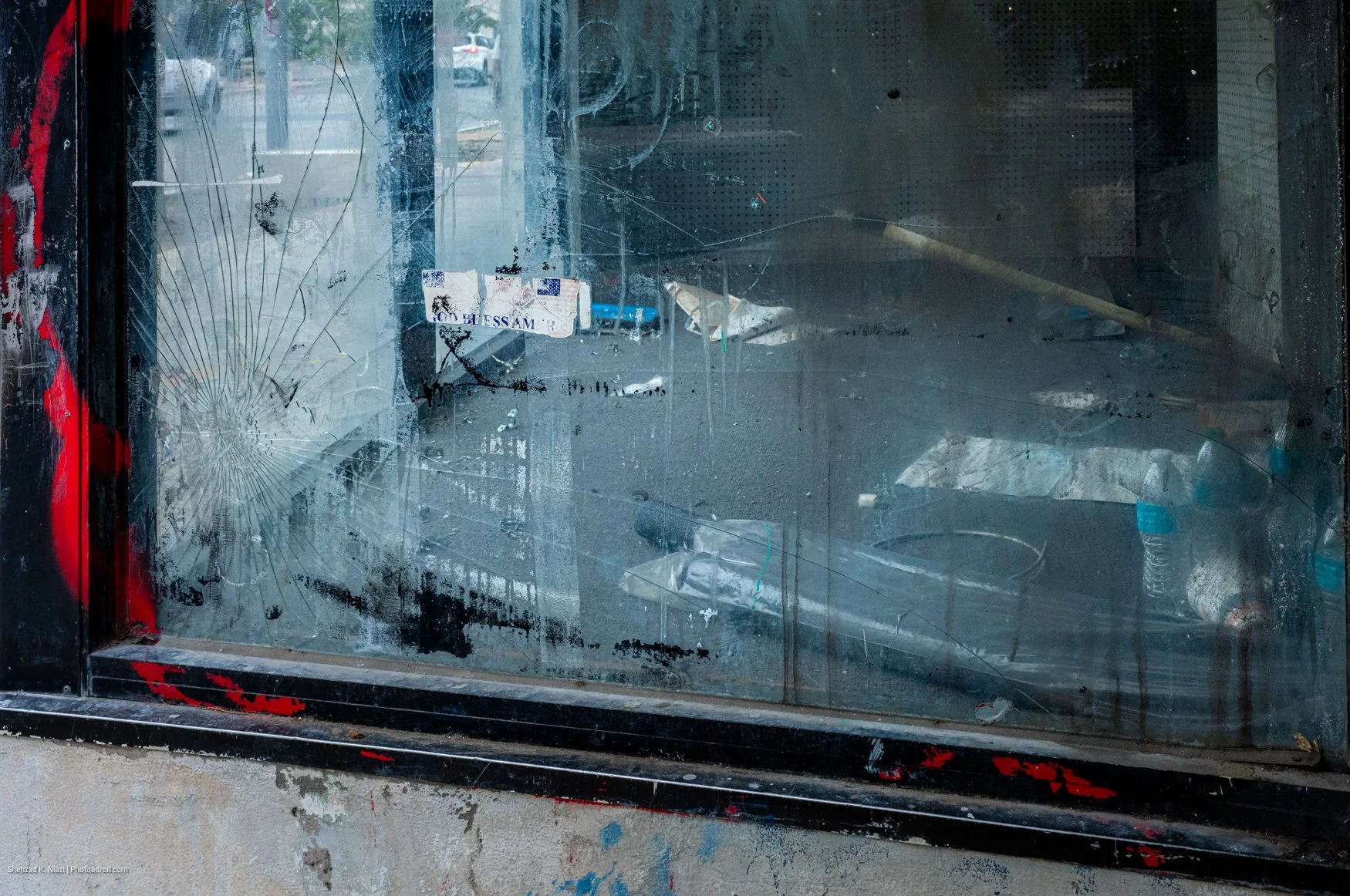
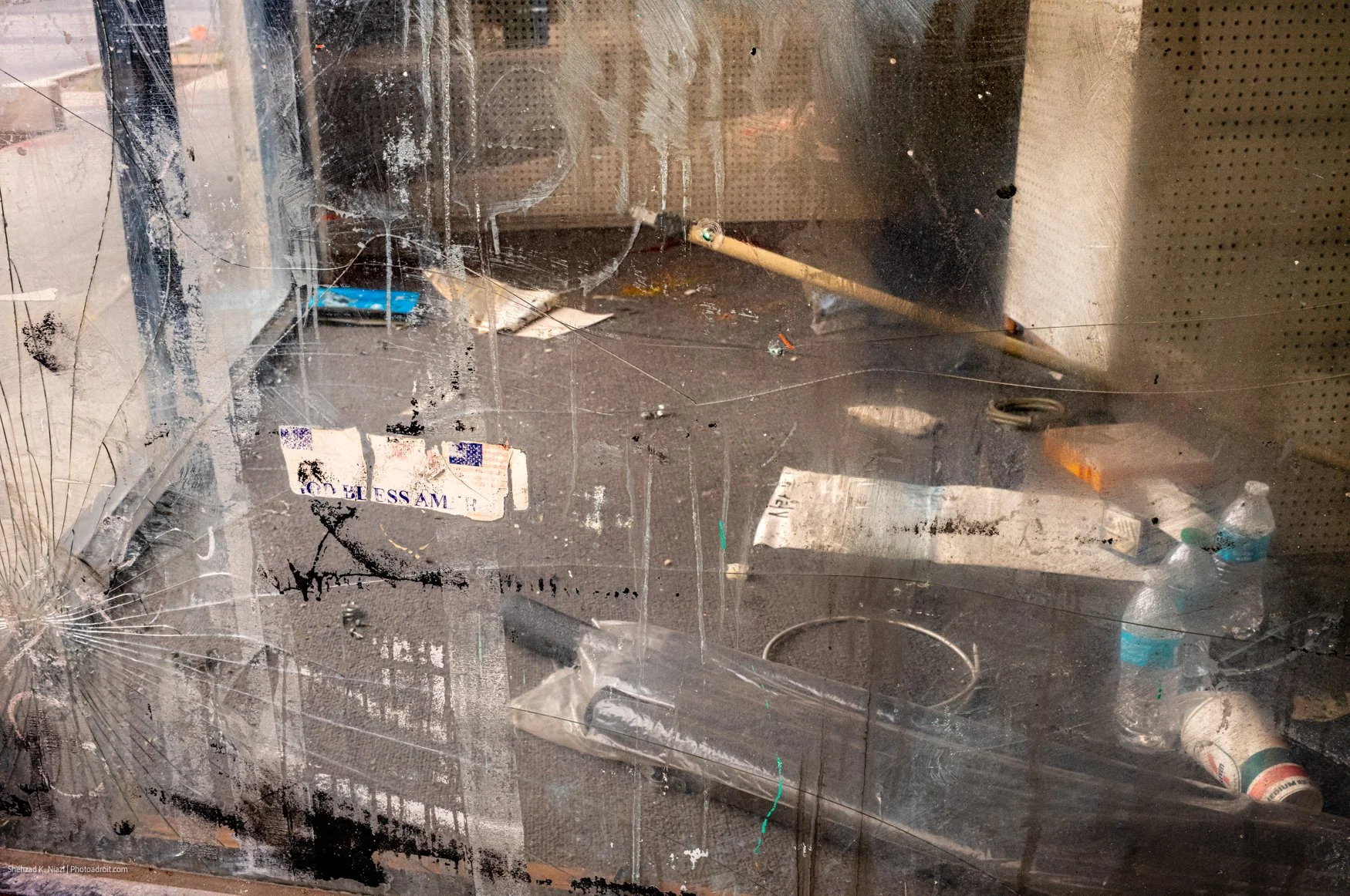
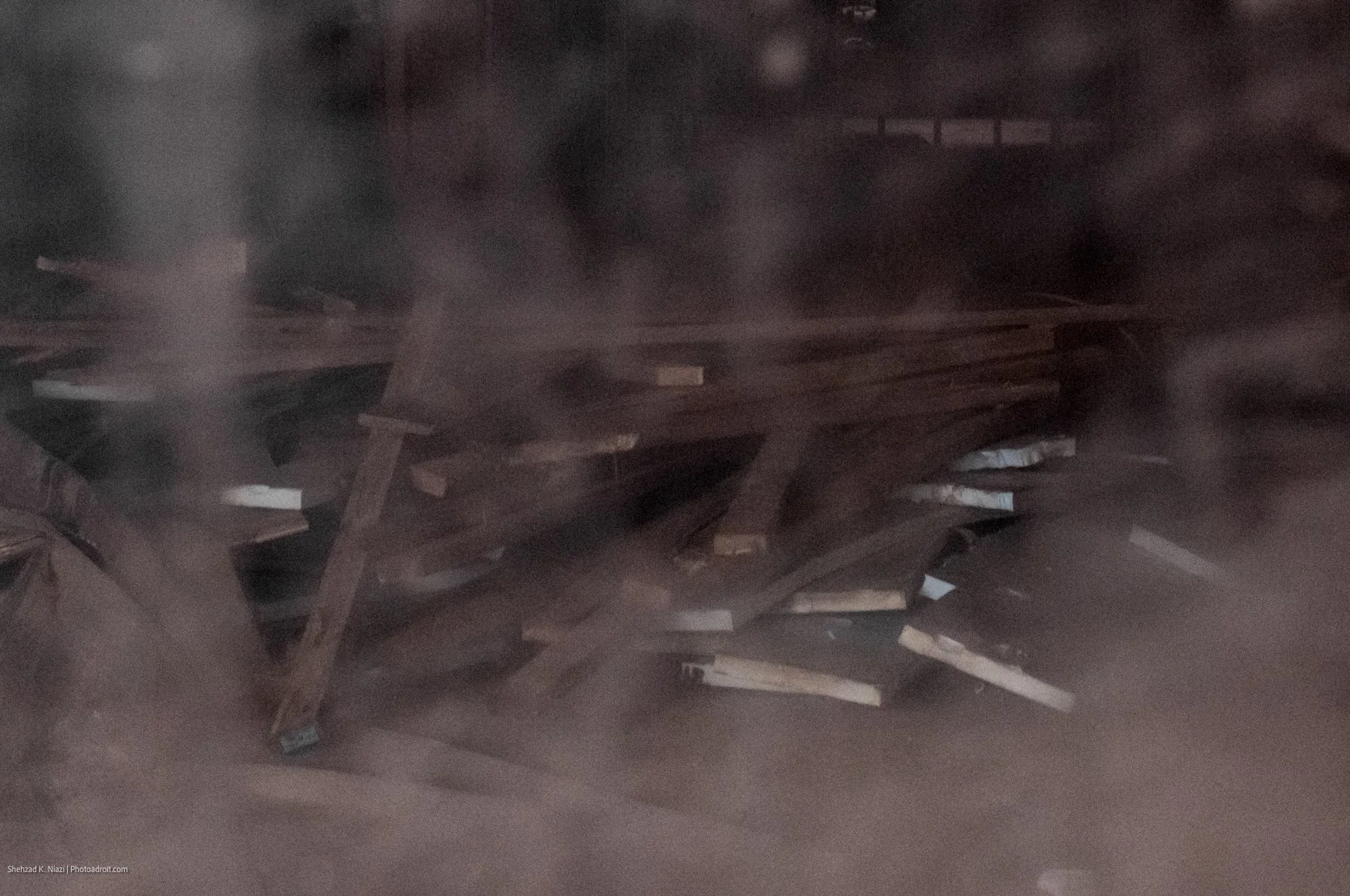
GOD BLESS AMERICA (The peeling sticker on the windowpane)
We cannot walk a straight line here. The orange vernacular of plebeian repair is writ large. It surrounds, arrests, and heralds the interminable march of transformation mistaken for progress. The more it changes, the more it remains the same—enduring denizens of brick, mortar, glass, and steel stare at the transient residents and visitors drifting through the streets. The chain-link fence cuts the view into diamonds, framing the dust of renovation. But even the obstruction is a portal.
The detour is not a nuisance; it is an instruction. The harsh, reflective orange of the barrels and the "DETOUR" sign force a pause, and in that pause, the beauty reveals itself. Behind the garish plastic barricades, a mosaic of lions stares back—solemn, golden, composed of thousands of tiles assembled by hand, displayed for all who are willing to stop and see. These lions, suspended in time, watch the workers and the wanderers with equal indifference. The jackhammers rattle the pavement, but the lions do not blink.
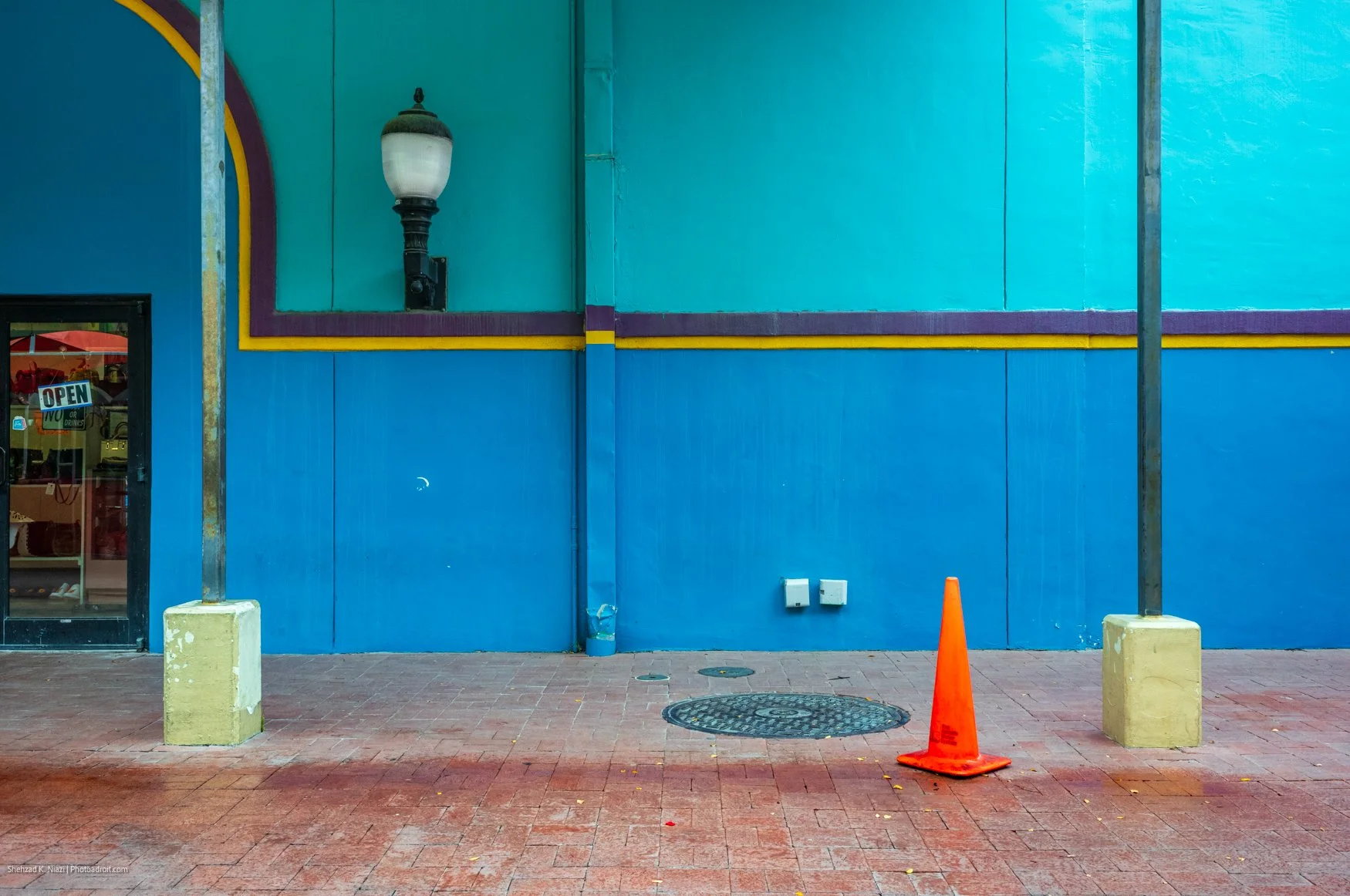
The grey world vanishes. The transition is violent; a chromatic shock jars the optic nerve like a physical blow. The beige stone and dusty glass are replaced instantly by walls of deep ocean turquoise, guarded by iron cacti painted in colors that do not exist in nature. It is aggressive, joyful, and necessary. These walls are a psychological boundary; they declare that the rules of the grey city outside no longer apply. A raucous, bacchanalian revelry is foretold.
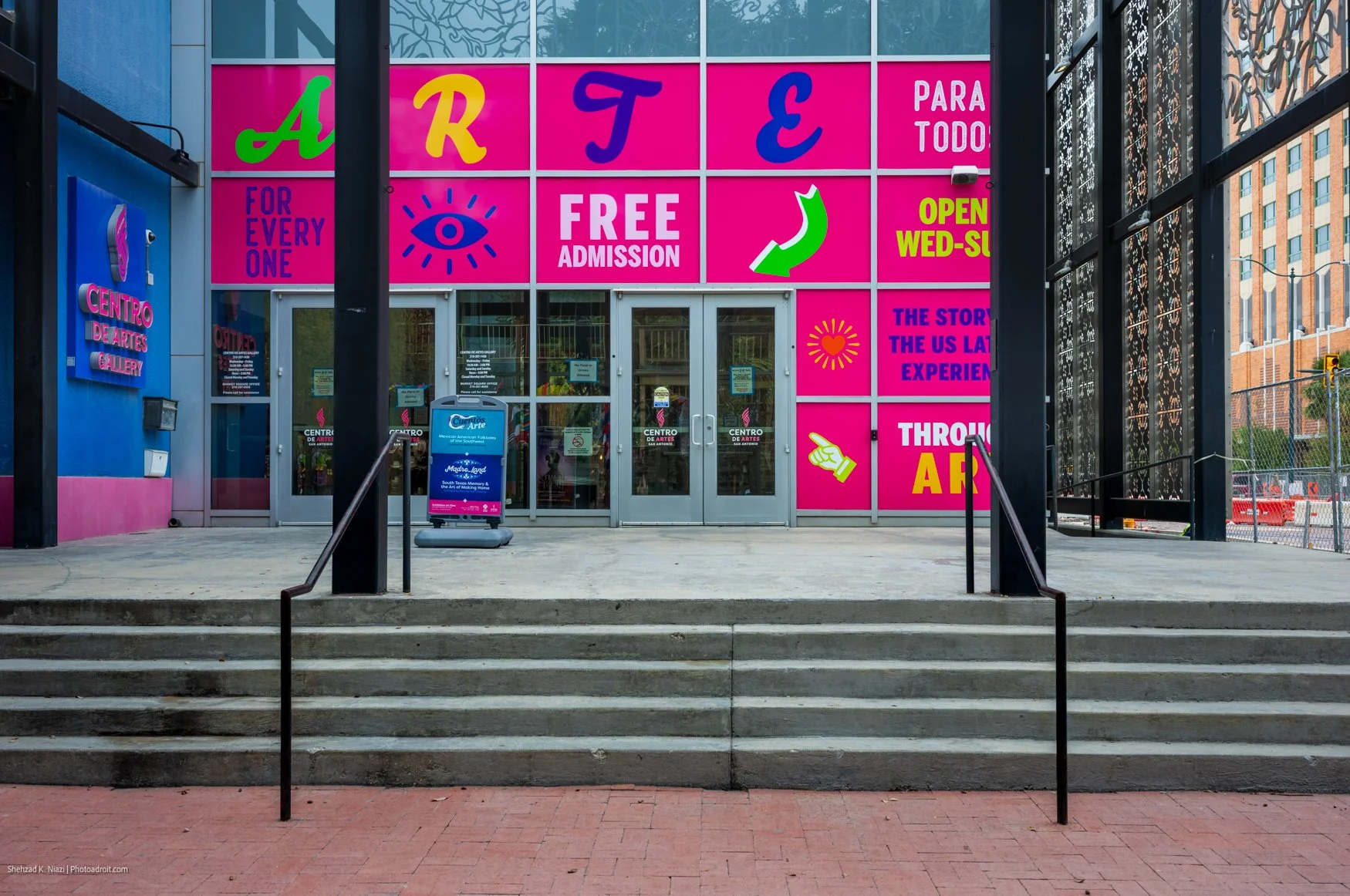
The typography screams in pink and yellow: Centro de Artes. Art for everyone. It is an invitation and a manifesto. We have crossed the threshold. We are no longer in the monochromatic metropolis of commerce, but in a village of vibrant kitsch and pastiche, intermixed with authentic cuisine and glimpses of culture that refuse to die.
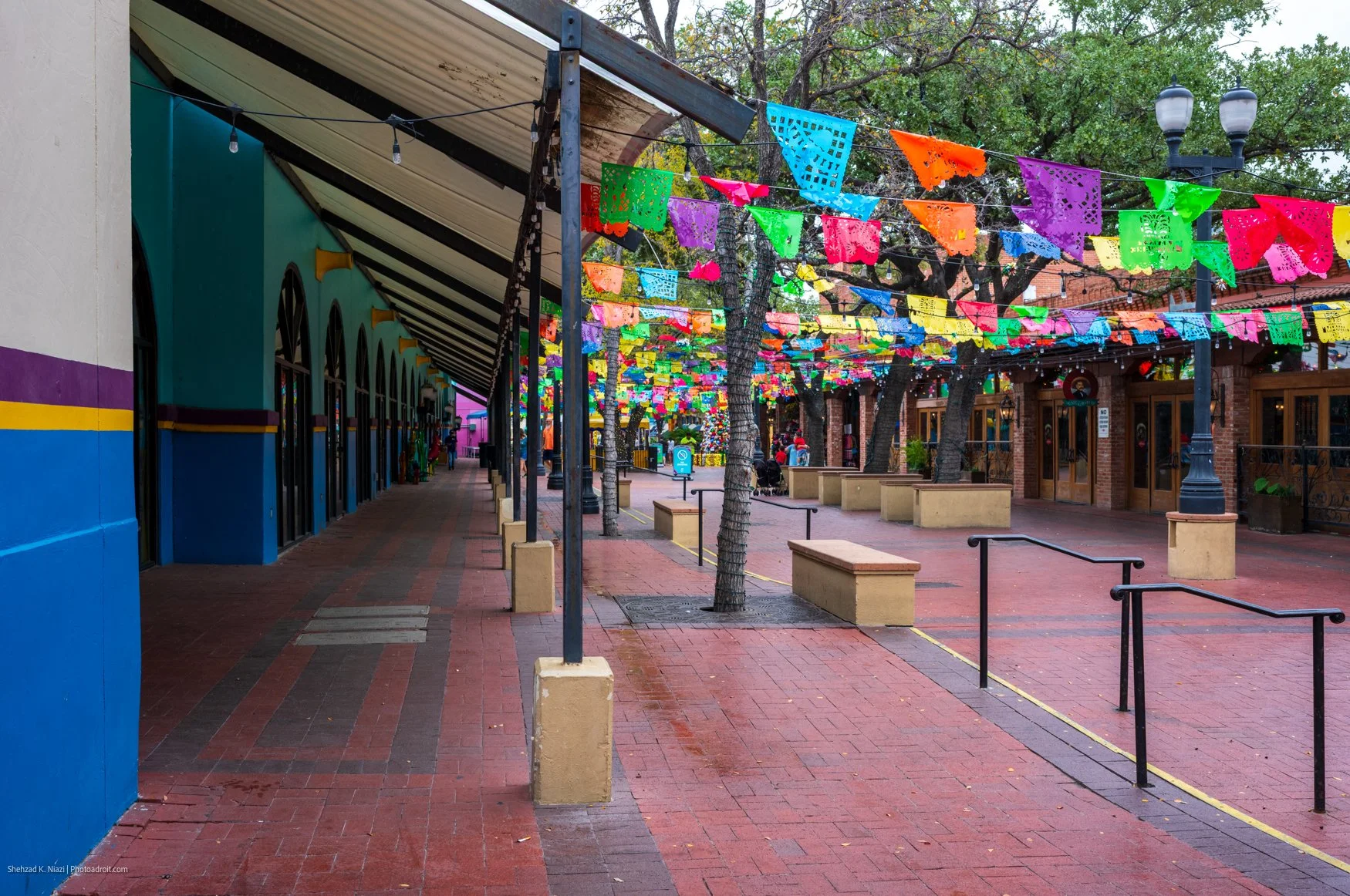
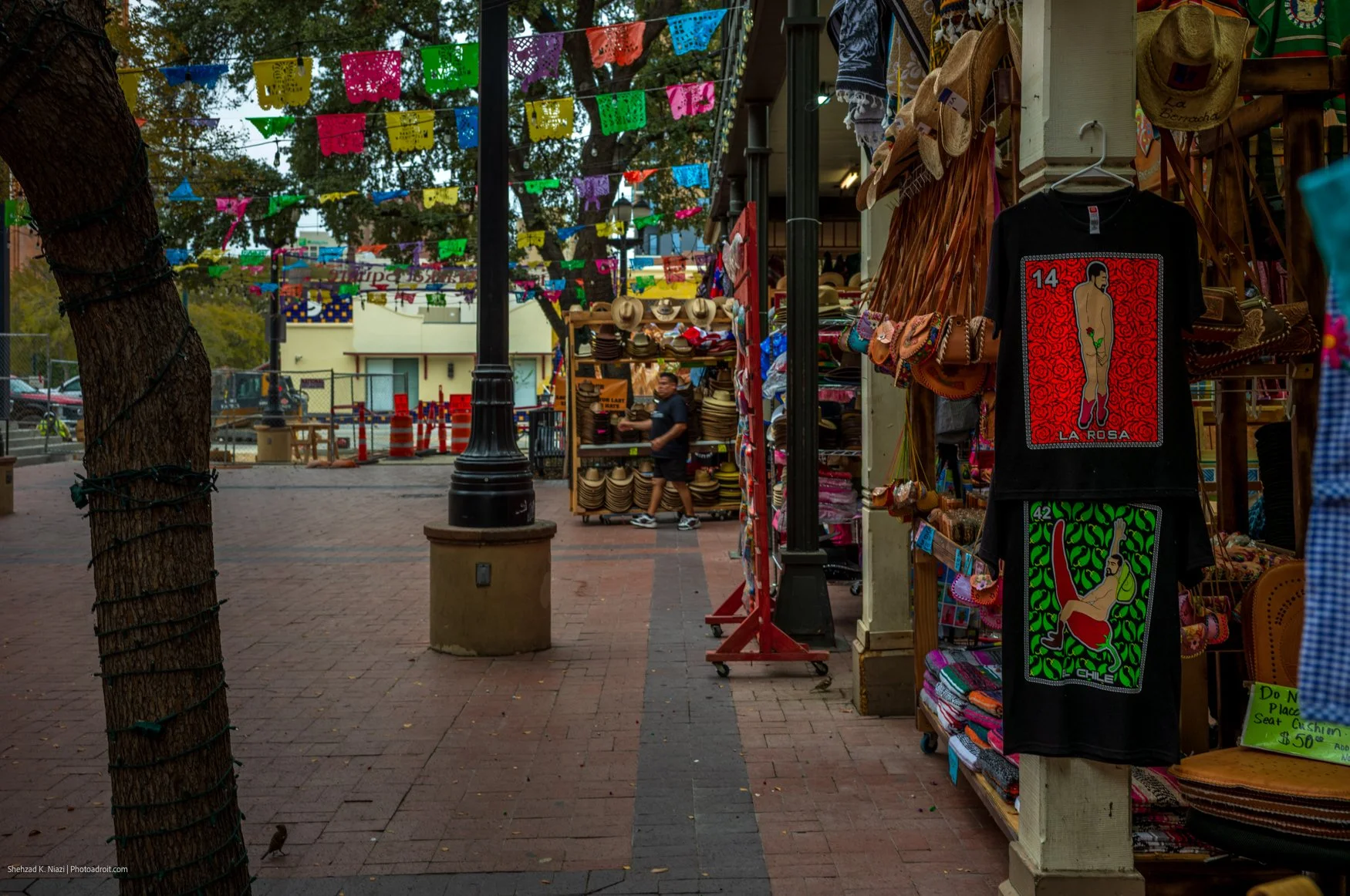
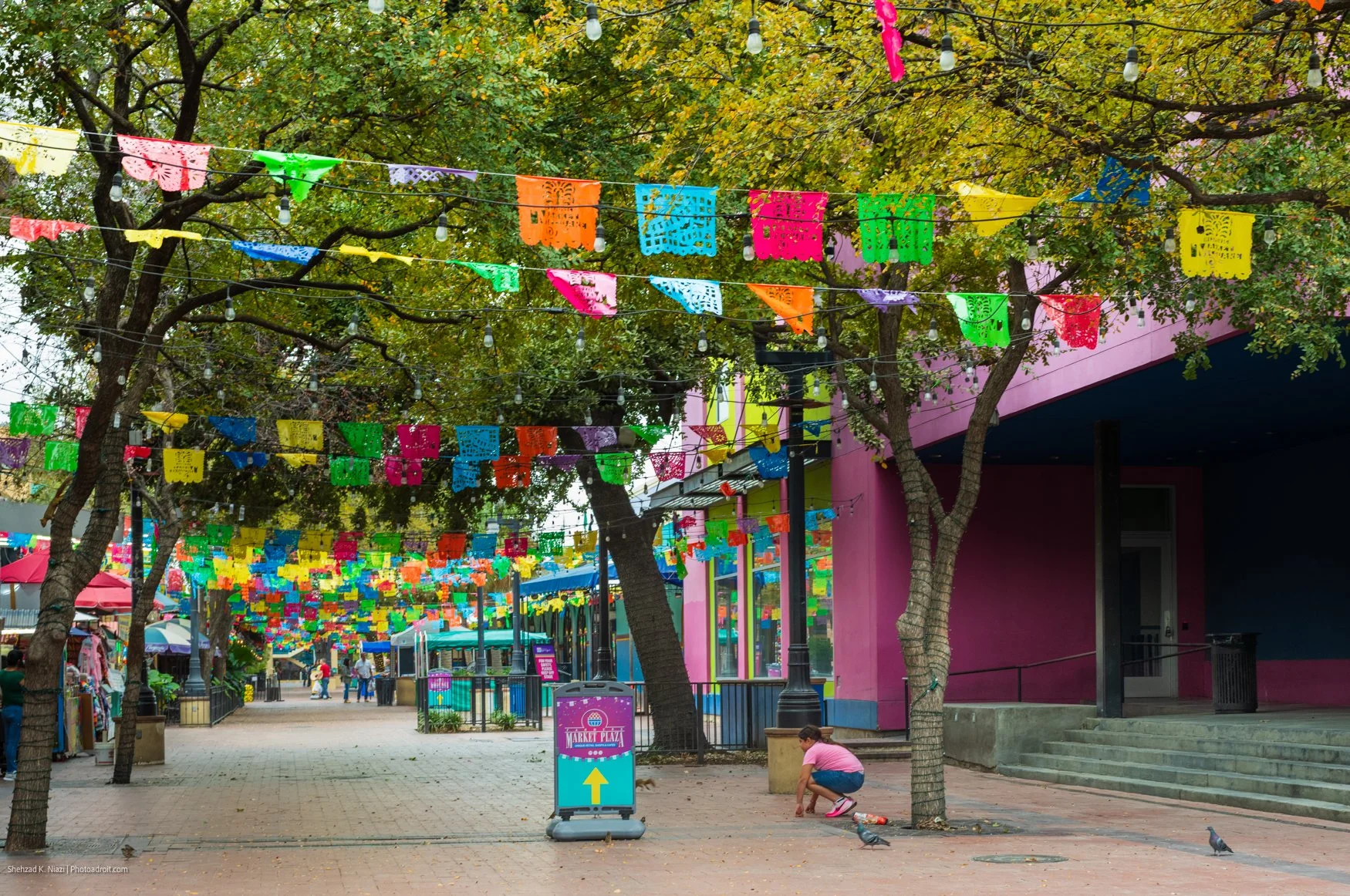
Enter the plaza. The sky has changed. It is no longer the sullen, overcast ceiling of a November afternoon, but a fluttering quilt of papel picado. Thousands of flags—emerald, solar yellow, violent pink—snap in the wind. They are restless, creating a rustling ceiling that softens the light and casts dancing shadows on the pavers.
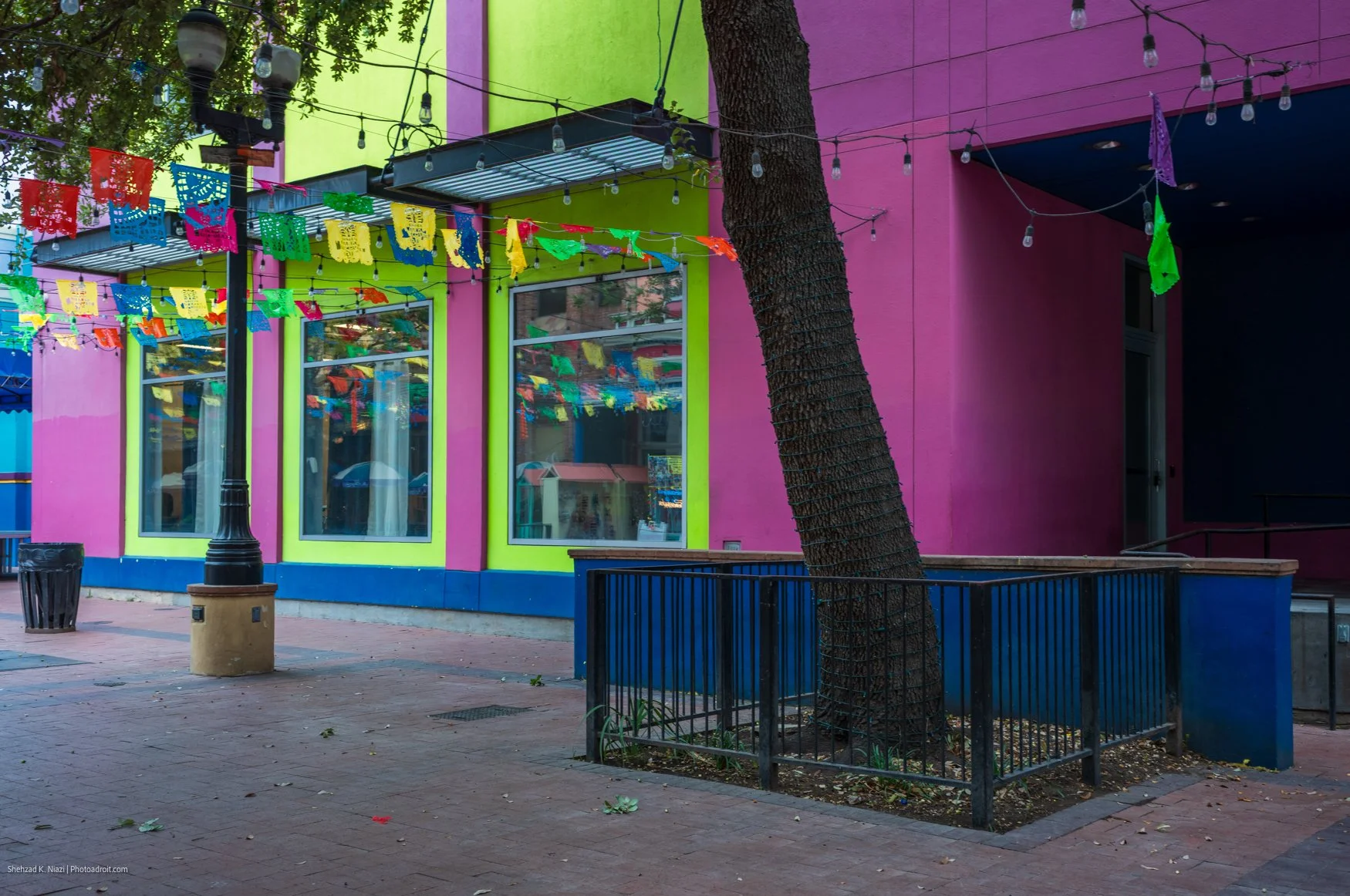
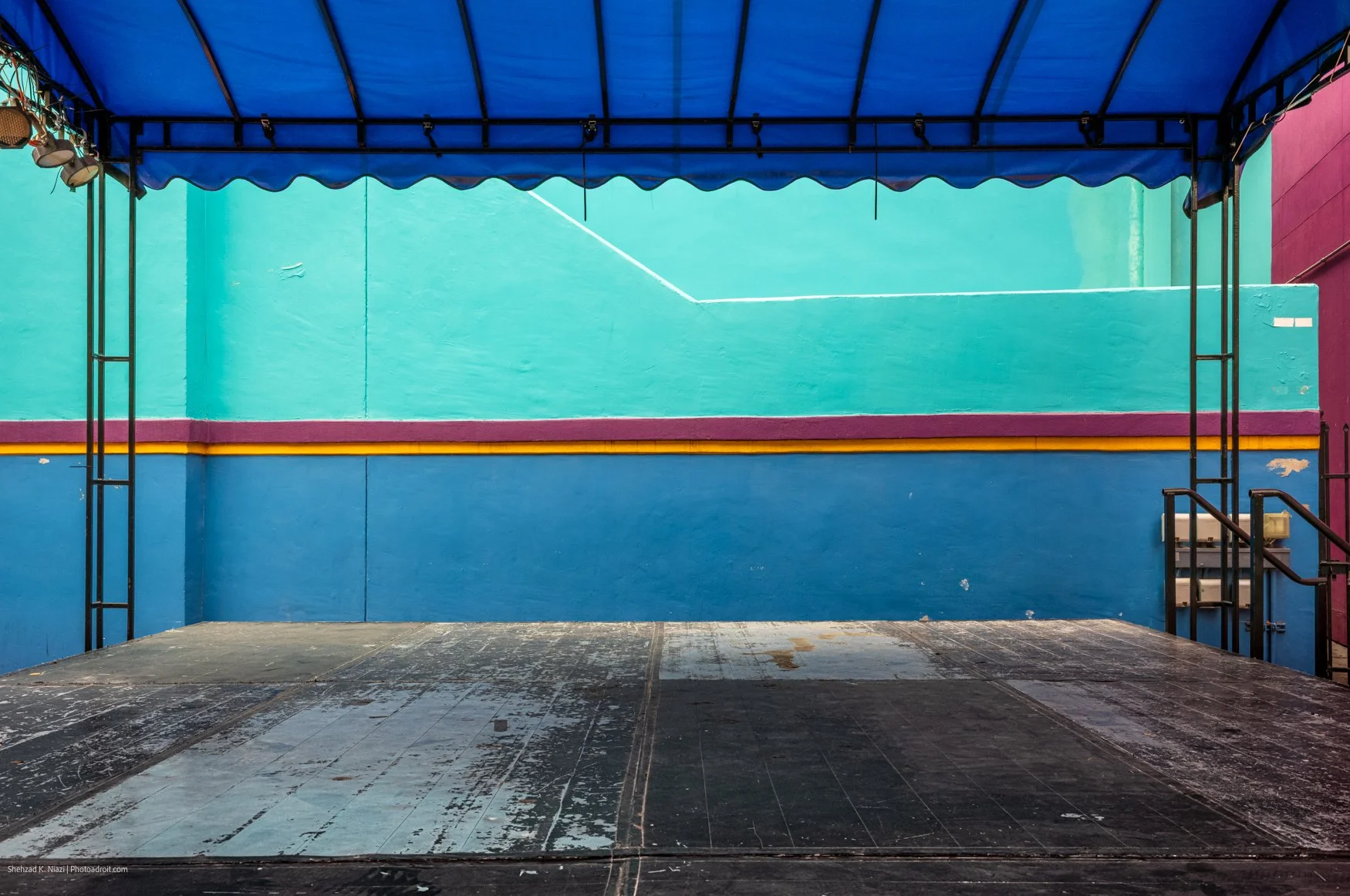
Even the silence here implies sound. The empty stage, painted in teal and royal purple, lies in wait. It is a vacuum yearning for the mariachis, for the gritos, for the shuffle of boots. The plaza feels expectant, charged with a latent energy that resides in the spirited plaster and the paint.
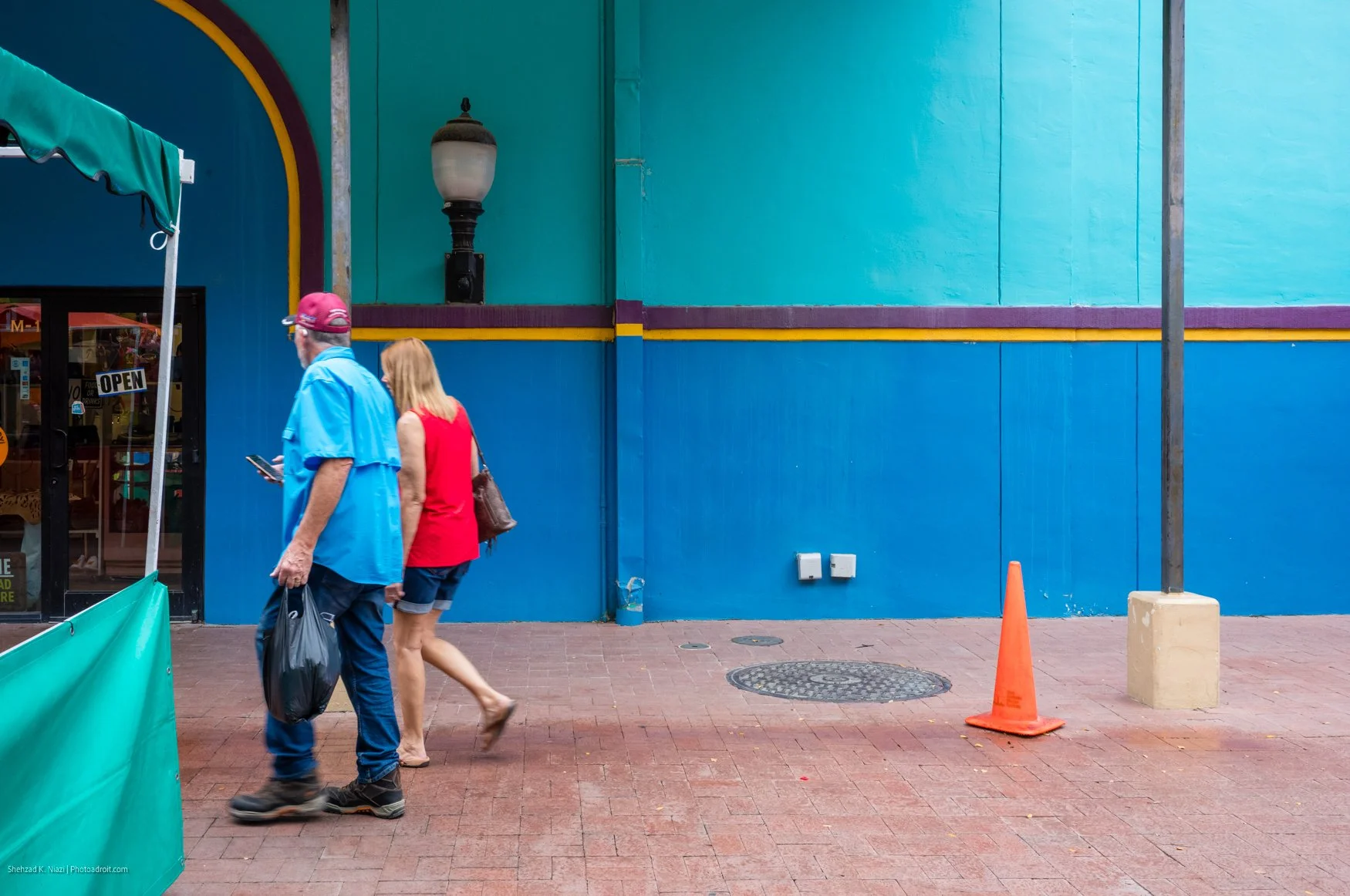
A massive Christmas tree anchors the square, a seasonal totem bedecked in ornaments that mimic the maximalist aesthetic of the market itself. It locates us in time—late autumn, the cusp of the holy days—yet the space, free of revelers for now, feels timeless, an eternal fiesta suspended in the amber of tradition.
But there are older saints here, too. On a facade of ruddy brick, a statue stands in a niche, presiding over the "Blessing of the Animals." Sign on the column made of bricks reads, “Produce Row.” It is a quiet corner, earthy and grounded. It is hard to ignore the duality of the place: a community of faith and capitalism, or perhaps, faith in capitalism.
The icons are watching. High on a wall, Frida Kahlo presides over the merchandise with her unyielding gaze. She is the secular saint of El Mercado, her image woven into the collective consciousness as deeply as the mortar between the bricks.
Yet, the outside world peeks in. Through the gaps in the palm fronds and the fluttering paper sky, the Gothic revival crown of the Tower Life Building looms. It stands like a sentinel, a stone watcher sneaking a peek from the other side of the borderland.
Modernity appears again down the narrow alleyways, a striped modern ziggurat framed by the hot pink and electric blue of the market walls. The contrast is absolute. The modern city surrounds this place, besieging it with glass and steel, yet it does not cross the asphalt moats filled with pedestrians. The color draws a bright line: here we retreat to escape the bleak modernity, seeking nostalgic recreation, and instead encounter a commercial, spurious retelling of the past.
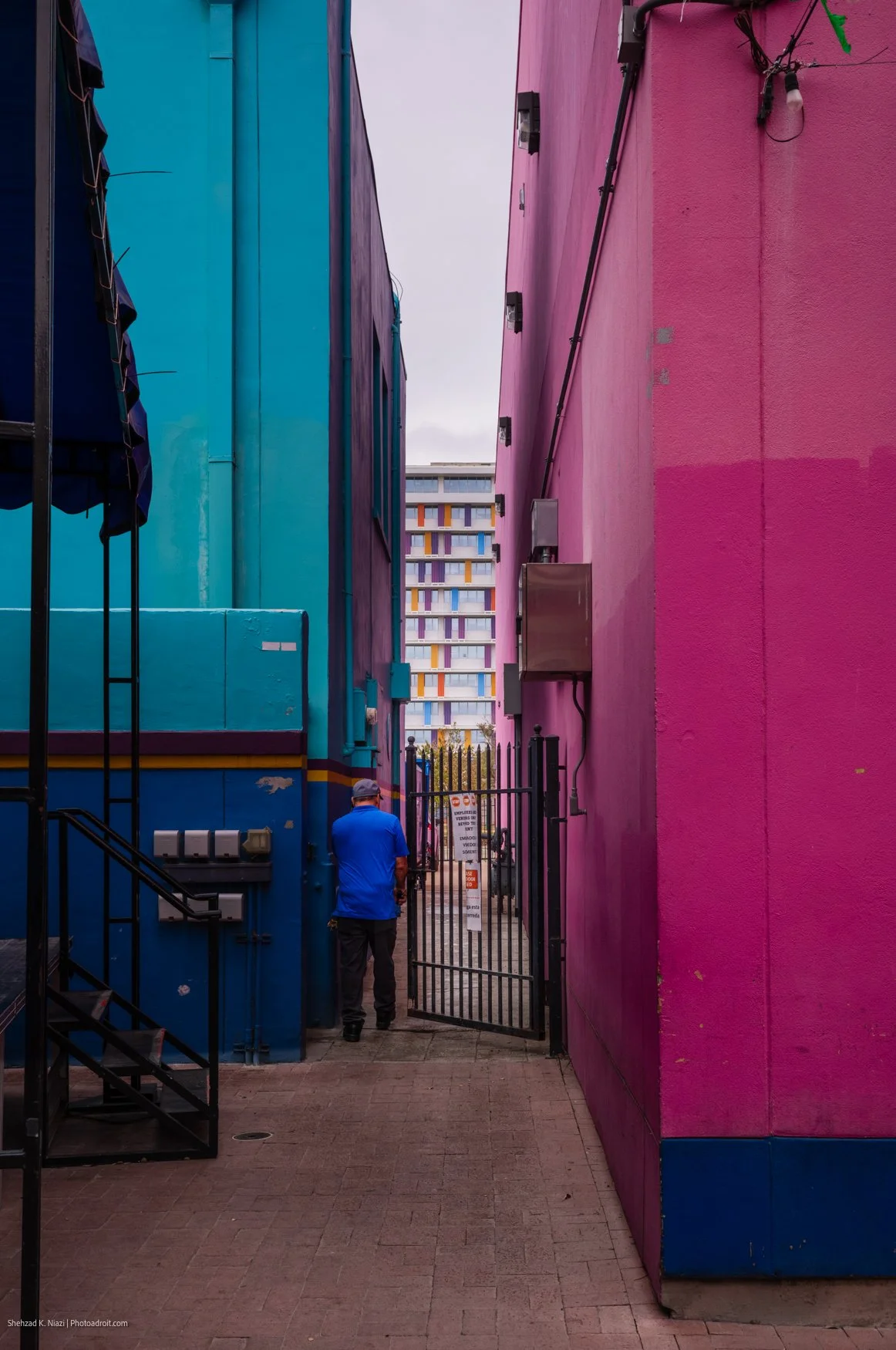
Colour is intense and arresting.
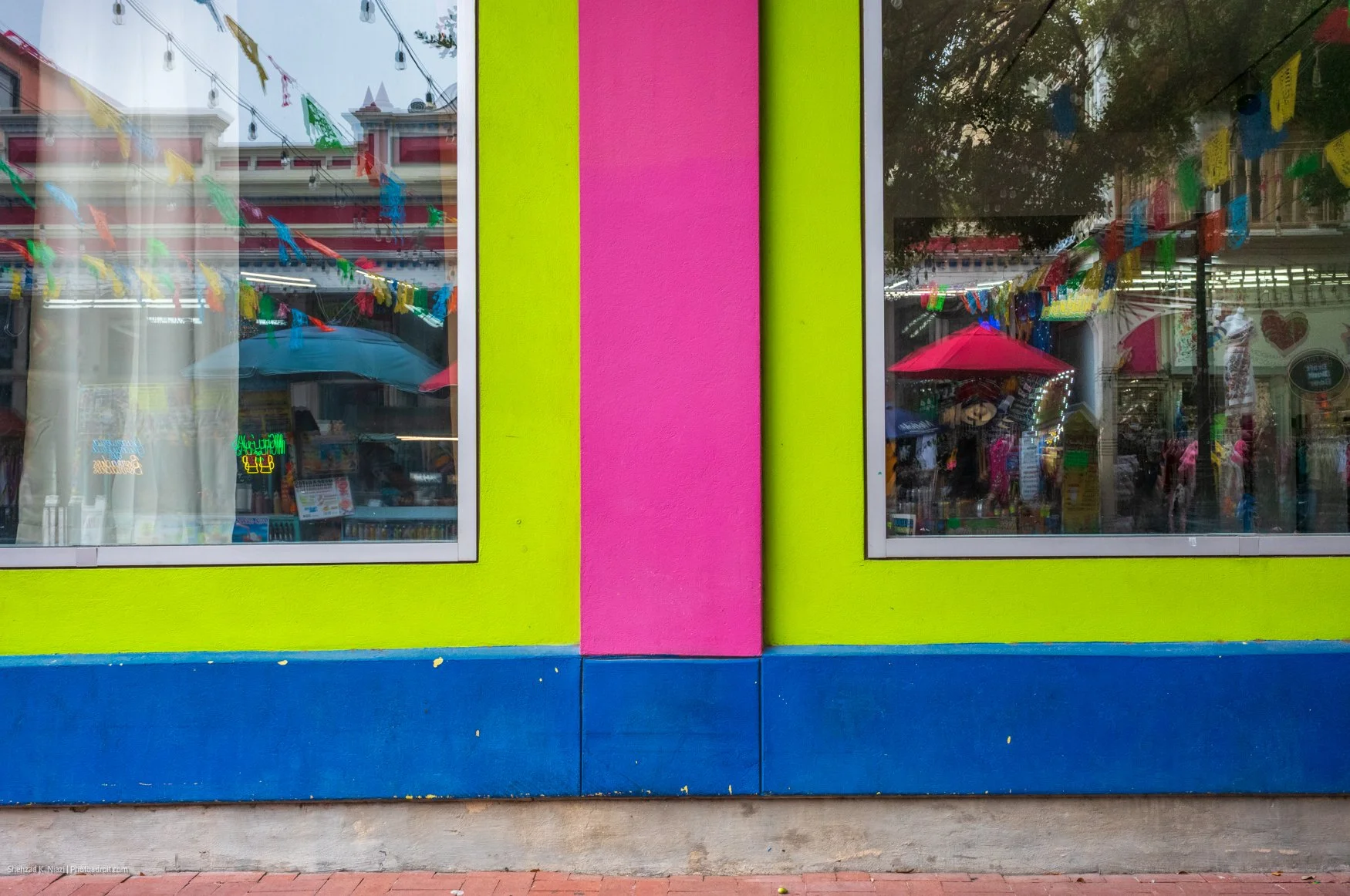
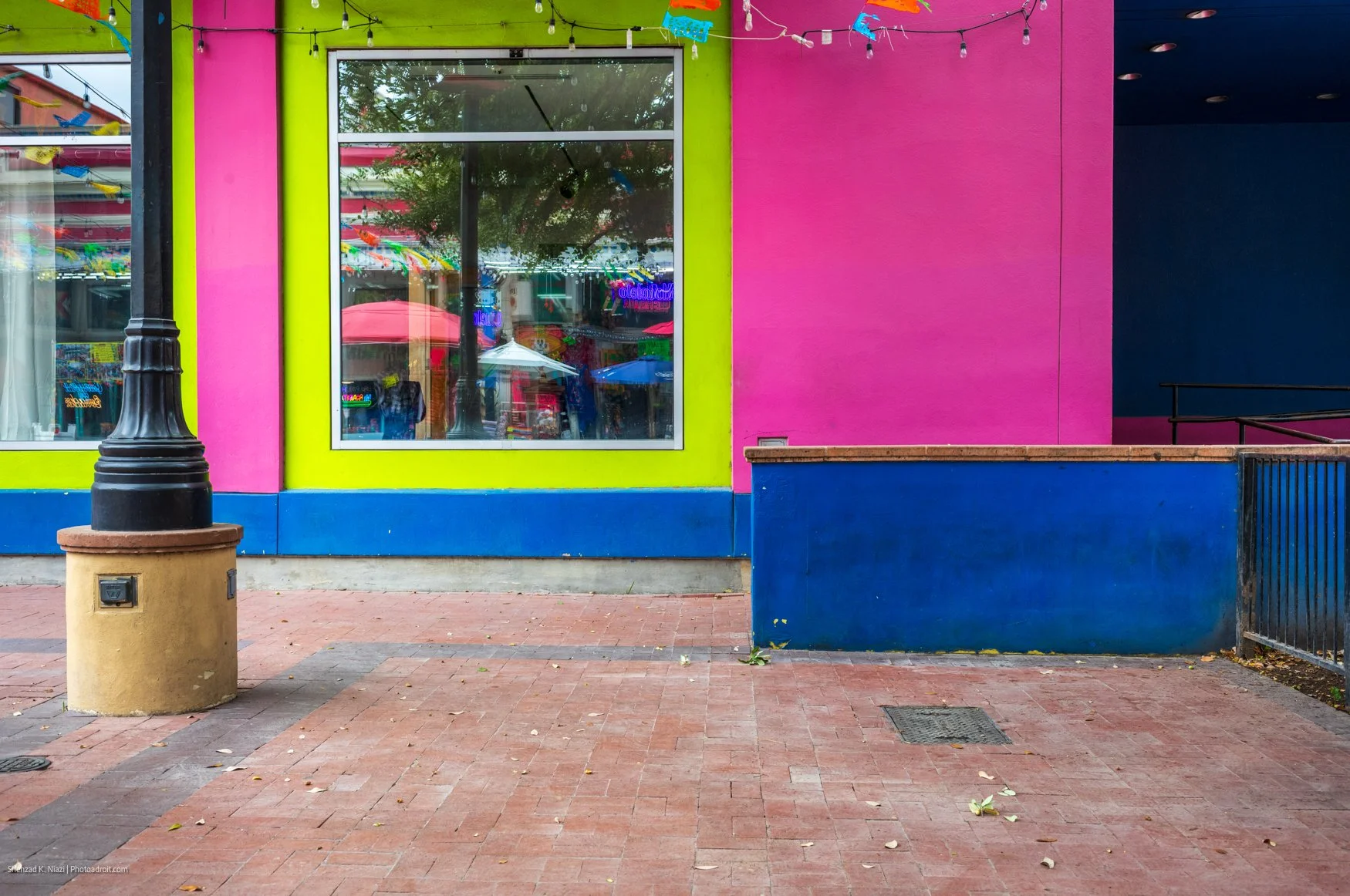
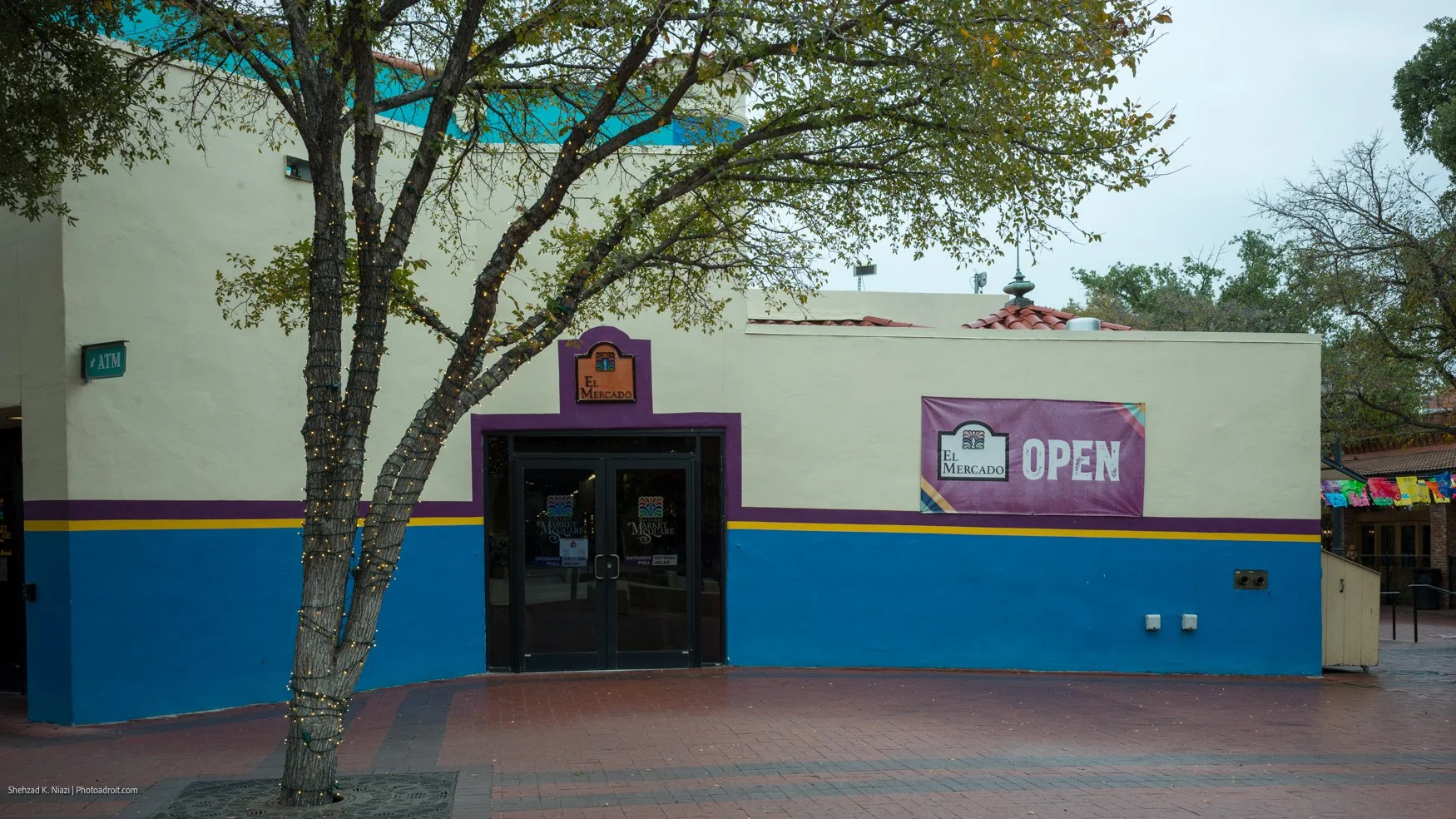
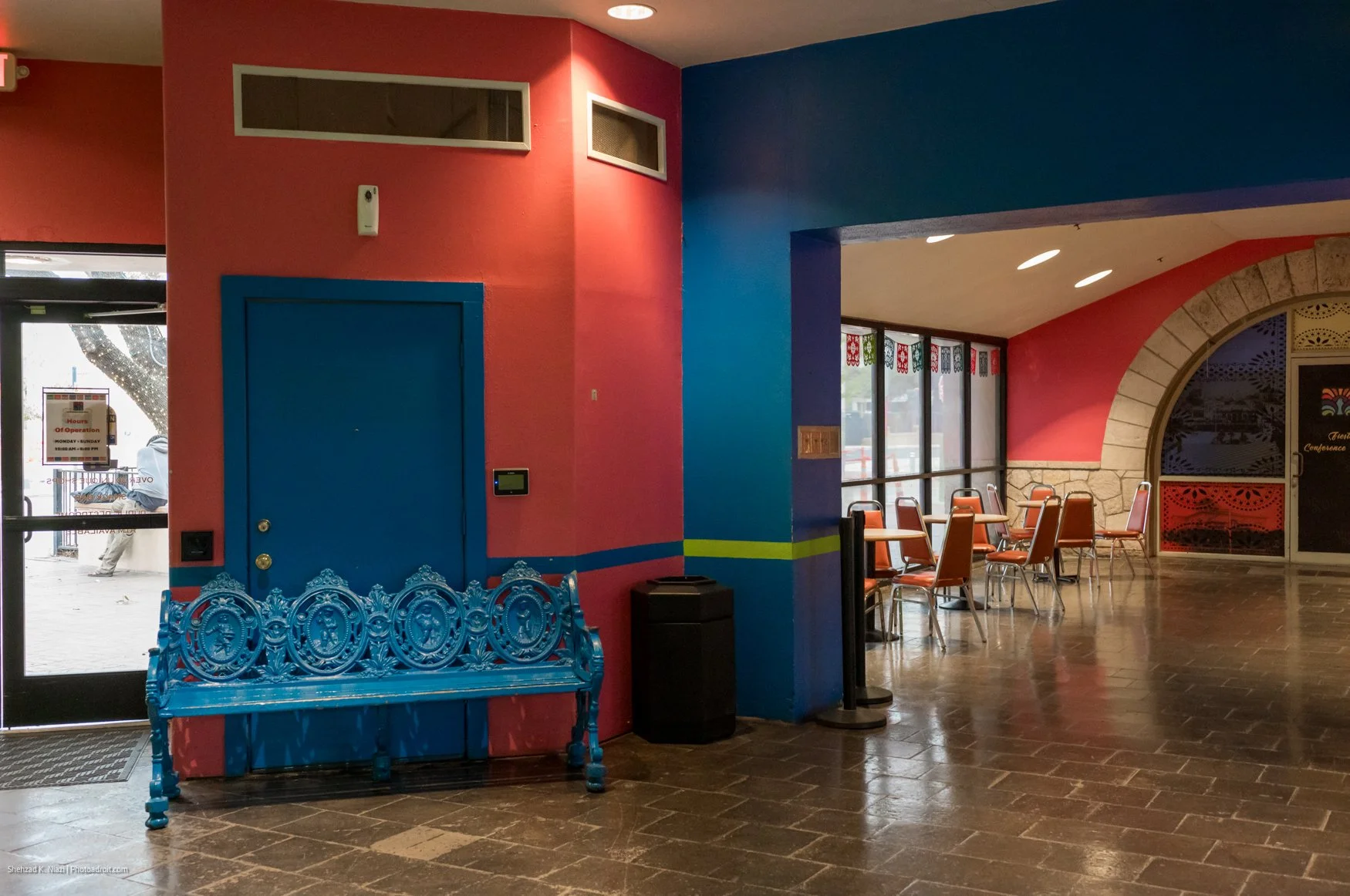
If you go on this walk, you too can stare at the stockaded ghosts in the glassy enclosures, exploit the discovery presented by the forced detours, and revel in a plaza that promises an explosion of color. You can partake, or you can pass through and retreat to the mundane. Now, the beige stucco building stands before us. The sign says "OPEN." The door is unlocked. The smell of leather and bakery sweets waits inside. The street gave us reflections; the plaza promises color. El Mercado is open.
But open to what? Open to whom? Open to where? From whence we came, and to whither would we go? Here lies the promise of discovery. A threshold of possibilities. Open the door, and commence.
As I lingered in the area, taking detours and reorienting myself among the brick, the dust, and the murals, the geography kindled a distant memory. The friction between the ruin and the renovation here recalled the LX Factory in Lisbon, captured in that raw, liminal moment before it was polished into a renowned artist community. And one cannot think of that city’s industrial soul without summoning its fractured saint, the inimitable Fernando Pessoa.
He was a man who lived not as a solitary figure but as a legion of distinct souls he called heteronyms. Writing as the sensation-seeking engineer Álvaro de Campos in his existential opus Tabacaria (The Tobacco Shop), he declared:
"Windows of my room, The room of one of the world's millions nobody knows... You look out onto the mystery of a street constantly crossed by people, To a street inaccessible to all thoughts, Real, impossibly real, certain, unknowingly certain, With the mystery of things beneath the stones and beings, With death putting dampness on the walls and white hair on men, With Destiny driving the cart of everything down the road of nothing."
He understood the detour. He knew that to stand at the threshold of the open door is to admit to a terrifying vacancy, one that is paradoxically crowded with every possibility.
"I am nothing. I shall always be nothing. I cannot wish to be anything. Aside from that, I have in me all the dreams of the world."
If we are to be nothing, let us at least be vessels for such dreams. And may we find the courage to realize them.